
Director’s Note
Dear partners,
As summer winds down and a new school year begins, we’re energized by the powerful examples we’re seeing of what happens when systems listen to students, meet them where they are, and support their journeys. From Heritage High students turning data into action, to partners on the Olympic Peninsula walking alongside rural juniors and seniors, this season is about partnership, purpose, and possibility.
Across the state, the common thread is clear: when students feel seen, supported, and challenged, they rise. Whether it’s a kindergartener in an inclusive classroom, a transfer student navigating their next step, or a young person leading a community conversation, we’re reminded that the back-to-school season isn’t just about routines—it’s about momentum.
Here’s to another school year of learning, growing, and pushing toward a future where every student in Washington has access to the opportunities they need to design the future they want.
In partnership,
Angela Jones
Director, Washington State and US Charters
Heritage High students turn data into dialogue
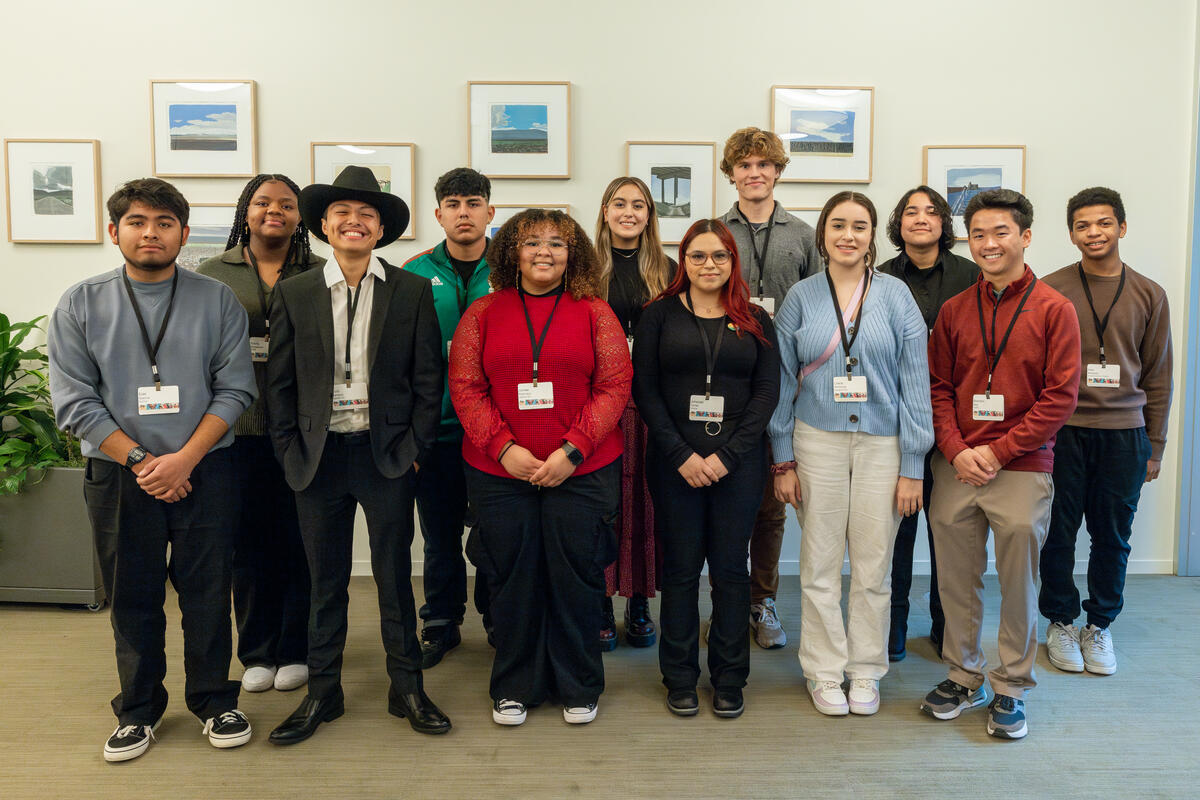
What’s new: After attending one of the Gates Foundation’s Education Roundtable meetings, two students from Vancouver’s Heritage High School returned home with a mission: make the data real for their community.
📊 The moment:
- Students Justin and Liliana were struck by data showing that while 90% of Washington high schoolers aspire to postsecondary education, only about half enroll.
- With support from Principal Derek Garrison and The Scholar First, they didn’t just reflect—they took action.
🚀 What they did:
- The students returned home and led community forums and school board presentations, turning postsecondary data into bilingual, student-facilitated discussions.
- They engaged families, peers, and local leaders through interactive formats that asked: “What, So What, Now What?”
- In the process, these students turned into seasoned facilitators, learning to anticipate questions and lead with impact.
Why it matters: When students are empowered to interpret and act on data, they don’t just share insights—they spark change. And when adults listen and lift them up, that change spreads.
▶️ Read how these students are leading the conversation in Vancouver
PREP connects students to college—and confidence

What’s new: A regional initiative on the Olympic and Kitsap peninsulas called PREP (Postsecondary Readiness and Enrollment on the Peninsula) is helping high school students in rural communities chart their futures after graduation.
The details: Launched last fall through a Gates Foundation Horizons grant, PREP is a partnership among school districts, Peninsula College, the College Success Foundation (CSF), and West Sound STEM Network.
- The program supports high school juniors and seniors—particularly those from low-income, rural, and underrepresented backgrounds—in Clallam, Jefferson, Kitsap, and Mason counties.
- PREP strengthens existing programs by embedding high-quality advising, hands-on college campus experiences, and community engagement.
- Students receive personalized support from CSF coaches to complete college applications, explore financial aid, and identify potential careers.
The impact so far: More than 1,300 students received one-on-one advising last school year, and over 800 participated in campus visits and career exploration trips.
- Some students visited a college campus for the very first time—donning welding gear, practicing CPR in health labs, and imagining a different future for themselves.
Why it matters: Fewer than half of Washington adults hold a credential beyond high school. PREP is helping students see that college is possible—and relevant.
- It’s also giving local leaders a glimpse of what happens when colleges, schools, and communities align around student success.
- Peninsula College President Suzy Ames summed it up: “None of the things that we’re doing are brand new, but all together, we’re putting our arms around every high school junior and senior in our community and walking them through that whole college exploration.”
▶️ Read more about PREP’s first year and future goals
New vision for high school to career: Purposeful Pathways

What’s new: A new concept paper from the Commission on Purposeful Pathways lays out a bold framework to help students explore purpose, gain essential skills, and build the networks they need for a choice-filled future.
- This paper is an early milestone in the Commission’s work, which is co-chaired by leaders from OneGoal, the Rodel Foundation, and the Pathways Impact Fund.
- It is funded by the Gates Foundation, facilitated by Education First, and composed of youth representatives alongside adult leaders, practitioners, and researchers from K-12, higher education, and the workforce.
Why it matters: The paper focuses on combining high-quality advising, accelerated coursework, and career-connected learning—because that’s what students say they need.
- Belonging, purpose, and social capital aren’t just nice to have—they’re essential.
- Just 13% of Gen Z students feel fully prepared to choose a path after high school.
- Students with access to real-world experiences, dual credit, and strong mentorship are more likely to succeed in the long-term.
What’s next: The full Commission report lands in 2026, but early efforts are already shaping local practice.
▶️ Read the Commission’s Concept Paper
Americans still believe in higher ed

New America’s 2025 Varying Degrees survey shows that most Americans still see postsecondary education as a smart investment—despite ongoing concerns about cost and access.
📊 Key findings:
- 73% say college provides a good return on investment.
- Almost all Americans also agree that higher education should equip students with the skills needed to succeed in their careers (96%) and help them become critical thinkers (93%).
At the same time, concerns remain:
- Only 50% think high-quality, affordable higher education is possible.
- The cost of college continues to be cited as the top barrier to enrollment and completion.
Why it matters: Public trust is key to expanding opportunity in education, and a majority of Americans believe more investment is needed in higher education.
- 🔥 Bright spot: Bipartisan support is growing for more public investment in financial aid and workforce-aligned programs—especially at community colleges.
- These findings are consistent with the Gallup-Lumina State of Higher Education 2025 report that offers additional insights from students and prospective learners.
▶️ Dig into the survey findings
Transfer works—when it works for students

New report: The Washington Student Achievement Council’s (WSAC) 2025 Transfer Efficiency Update shows that community colleges remain a powerful engine for postsecondary attainment—but disparities persist.
- Transfer efficiency means how smoothly students attending community and technical colleges (CTC) transfer to a four-year institution in Washington state.
📈 Key findings:
- 68% of associate degrees awarded in 2023–24 were transfer degrees.
- Transfer students graduate from four-year institutions in four years at the same rate as direct-entry students do in six.
- CTC students in major-related or STEM transfer programs were more likely to graduate in four years in high-demand fields like business, biology, and engineering.
But: Gaps persist in degree attainment and completion, especially for Black, Indigenous, and Pacific Islander students.
Why it matters: Washington’s statewide goal is 70% postsecondary attainment by 2025. Today, just over half of high school graduates enroll in a postsecondary program—and completion rates are even lower.
- Improving the transfer system can help put more students on a path to a postsecondary credential.
- WSAC’s research shows that transfers must be seamless, supported, and equitable to help reach the state’s goal.
▶️ Explore the full WSAC report
Wiggling is welcome in WA Teacher of the Year’s classroom

In Kim Broomer’s classroom at Ruby Bridges Elementary in Woodinville, every learner is included and engaged. “All kids benefit from diverse communities,” Kim shared in a conversation with Bill Gates. “And they all deserve to feel like they belong.”
- Students with disabilities, multilingual learners, and highly capable kids learn side-by-side.
- Specialists come into the classroom to work with students, rather than pulling students out of the classroom.
- And sensory-friendly tools—like chewable pen caps and wobble chairs—are standard, not special.
Why it matters: Kim was named Washington state’s 2025 Teacher of the Year for creating an environment where students feel welcome and are gaining more than skills—they’re gaining empathy.
- Their academic results are strong too. Outcomes at Ruby Bridges beat district and state averages.
▶️ Watch Bill Gates’ interview with Kim Broomer
Real stories. Big questions. One night to rethink higher ed.

What’s new: On September 17, the Gates Foundation Discovery Center will host an evening event celebrating Rethinking Higher Ed, a Roadtrip Nation documentary that follows young adults navigating postsecondary paths and career possibilities.
🎥 The experience:
- Attendees will get a first look at clips from the film, which was funded by the Gates Foundation.
- The real stars—Roadtrippers featured in the documentary—will join for a live panel and Q&A.
- Connect with grantees and community partners working to expand educational access and success.
- Enjoy food, refreshments, and conversation about what it means to make college “worth it.”
What we’re reading
- The race has changed. States need a talent plan that can keep up, Forbes
- Funds from Washington state go toward accelerated trade school programs, expanding skilled workforce, Northwest Public Broadcasting
- Making career readiness count: A 2025 update, Advance CTE