
May 2026: What’s working for Washington students

Friends and partners,
In February, I shared an update on where our Washington state work is headed: our Washington state strategy is evolving into a more integrated part of the foundation’s U.S. education work, rather than operating as a separate standalone initiative. Our team is working with U.S. Program leaders to figure out how this work continues and evolves, and we expect to have more to share in late July when the entire U.S. Program division finalizes its vision and approach for the next phase of work through the foundation’s closure in 2045.
I also shared in February that I’ll be leaving the foundation later this year. I’ve heard from several partners who thought I left already. I want to clarify that I am very much still here and don’t have a final date set for my departure but will definitely let you know!
In the meantime, our grantees are producing some incredible resources that we think will be beneficial to the collective work in Washington. Among other topics, this newsletter covers lessons learned in moving FAFSA numbers in rural southeast Washington, best practices for communicating with families about dual credit opportunities, and a World Cup connection thanks to our Community Engagement team.
Thanks for your continued work as we inch closer to warm weather and the conclusion of another K-12 and college school year.
In partnership,
Angela Jones
Director, Washington State & US Charters
Elevate’s work in the Blue Mountains region to move FAFSA numbers
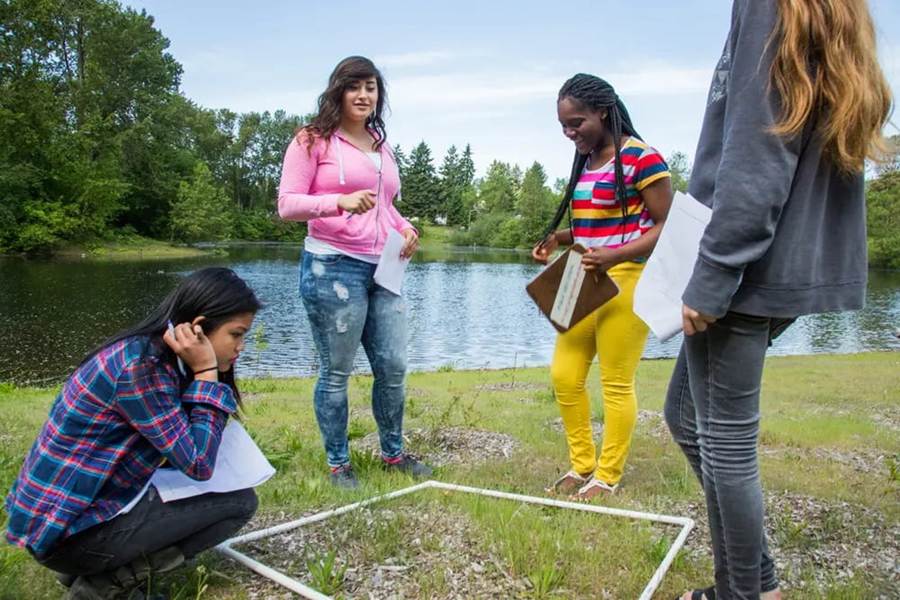
Welcome to FAFSA Success Story, a regular feature highlighting innovation in FAFSA outreach and completion efforts.
Our Horizons grantee Elevate recently presented to the Washington Completes FAFSA Advisory Board about their work to increase financial aid (FAFSA/WASFA) completion rates in Walla Walla and Columbia counties, two counties that are primarily rural. Elevate currently supports 633 seniors across the region.
- As of April, 69% have completed financial aid applications and another 7% have started.
- Columbia High School is at 62% completion, compared to finishing in the low 30s last year, while Walla Walla High School hit its 70% completion goal and is still rising.
- College Place made financial aid completion a graduation requirement with an opt-out, and the school reported that this policy drove significant momentum.
As Elevate discovered, financial aid completion goes up when you treat it as a shared, year-round effort backed by trained, trusted adults.
- Their region has tracked more than 2,700 interactions with students and families this cycle, a volume of support they had not achieved in prior years.
- The region runs Family Academy sessions in English and Spanish so parents understand financial aid, scholarship options, and enrollment steps.
- The region also created postsecondary ecosystem teams at each high school with shared goals, and they monitor completion week by week to see what’s working.
- Counselors, teachers, administrators, CBO partners, and other staff all take responsibility for getting remaining students across the finish line.
Why it matters: Rural students with limited career and postsecondary exposure, or families with language barriers, need people who can walk alongside them through the process. Elevate is showing that making it a shared responsibility for all the trusted adults who interact with these students can make a big difference.
- For districts thinking about replication, Elevate’s recommendations include designating a central coordinator, building all-school ownership, using WSAC’s student-level FAFSA dashboard for real-time tracking, and offering bilingual access at every touchpoint.
Watch: Full WA Completes FAFSA Advisory Board presentation
New Toolkit: What Washington families want to know about dual credit
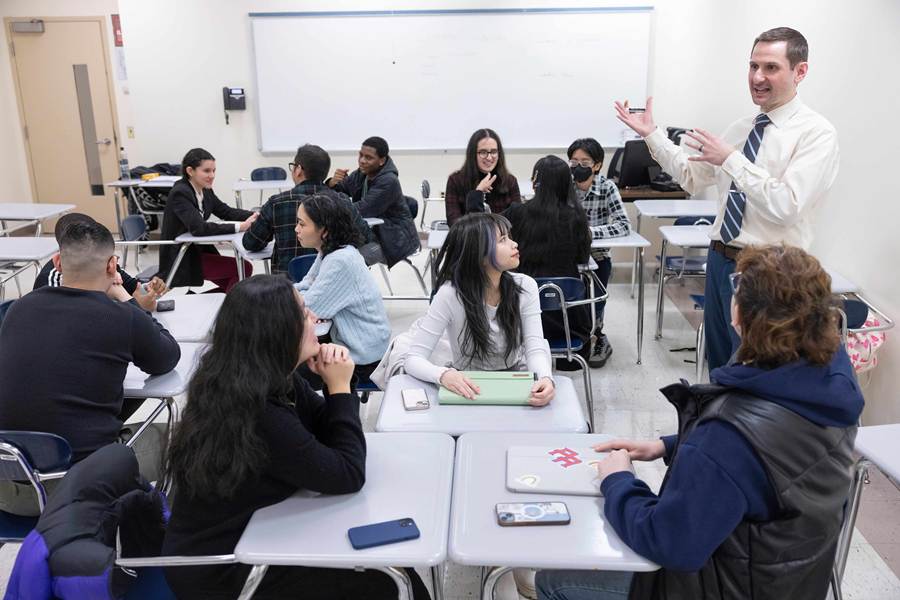
Welcome to our Dual Credit Spotlight, a regular feature highlighting research, trends, and bright spots in expanding college access through dual credit programs.
Families want to know more about dual credit opportunities. Schools are required by state law to tell them, but communication is often too vague, arrives too late, or isn’t available in their language. A new toolkit and website, developed by Stand for Children Washington, with funding from the Gates Foundation, is designed to fix that.
The project started with focus groups and surveys with Washington families. During these conversations, Stand for Children found that:
- Families consistently want the same five things upfront: costs and fee waivers, credit transferability, academic rigor, support systems if students struggle, and what participation will mean for their student’s high school schedule.
- Most schools lead with benefits and skip the tradeoffs. Families don’t learn about challenges until students are already enrolled.
- Spanish-speaking families reported relying almost entirely on their students to receive any information about dual credit.
- About half of families said they want to hear about dual credit as early as 8th grade.
Stand used this feedback to develop a dual credit communications toolkit that includes templates and sample communications for texts, emails, website content, and flyers.
- The toolkit is organized around a four-season communication calendar so outreach is planned and consistent.
- Materials are available in multiple languages, with clear guidance on why translation quality determines whether families can act on the information.
- The toolkit is free, although users will have to register with their name and email to download the resource.
Why it matters: Students who earn dual credit in high school are more likely to pursue a postsecondary degree. They also enter college with credits that are often earned at lower cost. But access has favored students whose families already know the system. This toolkit is designed to change that at the school and district level.
Read more: Dual credit communications toolkit website
ERDC’s Postsecondary Data Strategy: A progress report
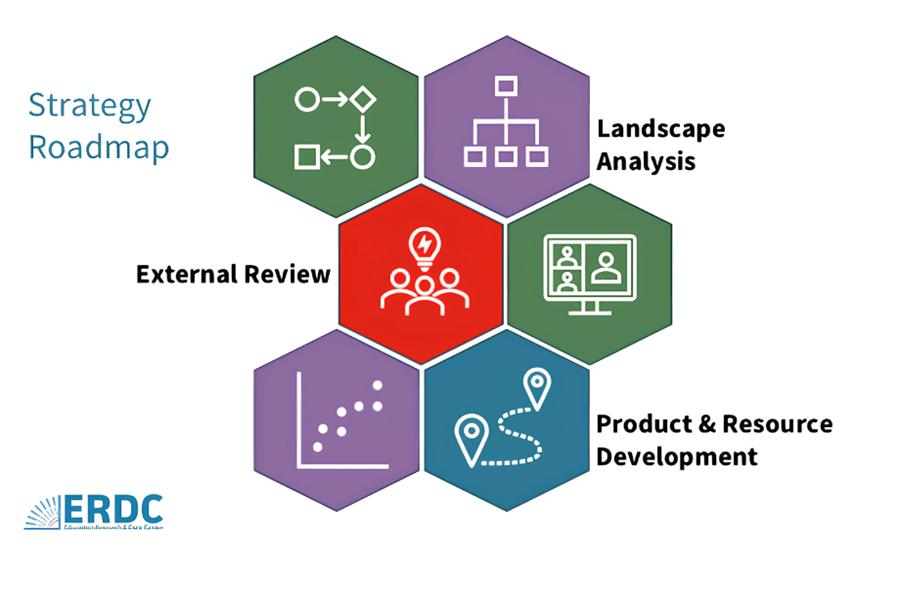
Washington’s Education Research and Data Center (ERDC) is building a postsecondary data strategy, a framework to guide how the state identifies, harmonizes, and represents postsecondary data across systems. The work is supported by Gates Foundation funding, and ERDC just released its first progress report that covers:
- A landscape analysis of how postsecondary data is currently collected, structured, and used across Washington state.
- Results from the two partner feedback sessions held in August and September 2025.
- An overview of next steps ERDC will take in 2026 to move from strategy to implementation.
Why it matters: Washington students move across systems—K-12, community college, four-year institutions, workforce programs—and the data about their journeys is scattered and inconsistent. When you can’t measure transitions reliably, you can’t improve them.
- ERDC’s strategy work is laying the groundwork for a state data infrastructure that reflects where students actually go after high school and what actually helps them get there. For partners and researchers who want to shape this work, ERDC’s feedback sessions and comment process are an entry point—the strategy is not finished, and input from practitioners is part of how they’re building it.
Read more: ERDC’s postsecondary data strategy
Seattle’s Chinatown-International District is getting ready for the World Cup—and more

Seattle will host six FIFA Men’s World Cup matches starting next month, with an estimated 750,000 visitors coming to the region.
- Lumen Field is just a few blocks from Seattle’s Chinatown-International District (CID), a neighborhood that has served as a cultural and economic anchor for Indigenous, Asian American, Pacific Islander, immigrant, and refugee communities for over a century.
- The CID is preparing carefully with businesses ahead of the event, and watch parties and activation events are in planning.
Beyond the one-time boost that could come from this World Cup, more investment is needed to sustain the important people and small businesses in this neighborhood.
- Median household income in the CID is around $37,000, compared to Seattle’s citywide average of $121,000.
- The neighborhood ranks among Seattle’s highest-displacement-risk areas, with 95% of residents renting.
In response, our Community Engagement team provided nearly $6 million in multi-year, unrestricted grants to organizations working in the CID over the last two years.
- What the CID has built over generations—services designed by and for the communities they serve, delivered in over 50 languages, rooted in cultural knowledge—took sustained commitment to build and takes sustained commitment to keep.
Why it matters: The World Cup will bring visibility, but visibility is not the same as investment. The Community Engagement team will continue looking for ways to resource the organizations preserving what makes this neighborhood strong and helping them adapt to what comes next.
Read more: Supporting Seattle’s Chinatown International District
When education funders work together
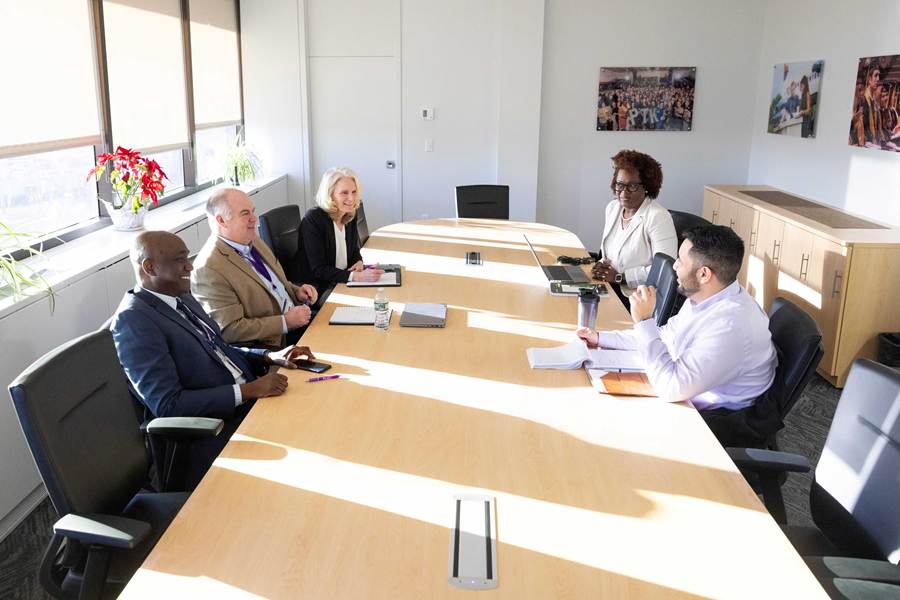
When we launched our Washington state education strategy, we chose to work in three ways: supporting locally led solutions at the regional level, scaling evidence-based approaches statewide, and bringing education leaders and funders together to build shared strategies.
- For that third piece, we partnered with Philanthropy Northwest’s Giving Practice to facilitate the Washington Education Funders Table, a network of corporate and philanthropic funders who began meeting in November 2023.
- The Giving Practice just published a blog post drawing out lessons from this work, and the conversations with our colleagues are worth reading closely.
Here are just a few examples of the collaboration and co-funding that has taken shape in the last few years:
- Along with the Schultz Family Foundation, we are funding CampusEvolve, an advising tool being developed with input from students and advisors in Washington state.
- The Ballmer Group and Gates Foundation are supporting the CTE Dual Credit pilot in NWESD and its expansion to other regions, with the goal of increasing access to college credit in high-demand career pathways.
- The Gates Foundation and Microsoft co-hosted two AI communities of practice with school districts working to build responsible approaches to AI in classrooms.
- The Gates Foundation and Raikes Foundation are funding National Center on Education and the Economy—to provide technical assistance and research on Washington State’s education and workforce system.
Why it matters: What the Education Funders Table has shown is that when funders know each other, understand each other’s constraints, and share a commitment to the same students, they can move faster and further than any one of them would alone.
- Outside funders have taken note: seeing active funder coordination in Washington has influenced national funders to invest here and scale promising pilots to other regions.
Read more: What Happens When Funders Move Together: Inside The Washington Education Funders Table
AI in the Classroom: What students say, and what the evidence shows
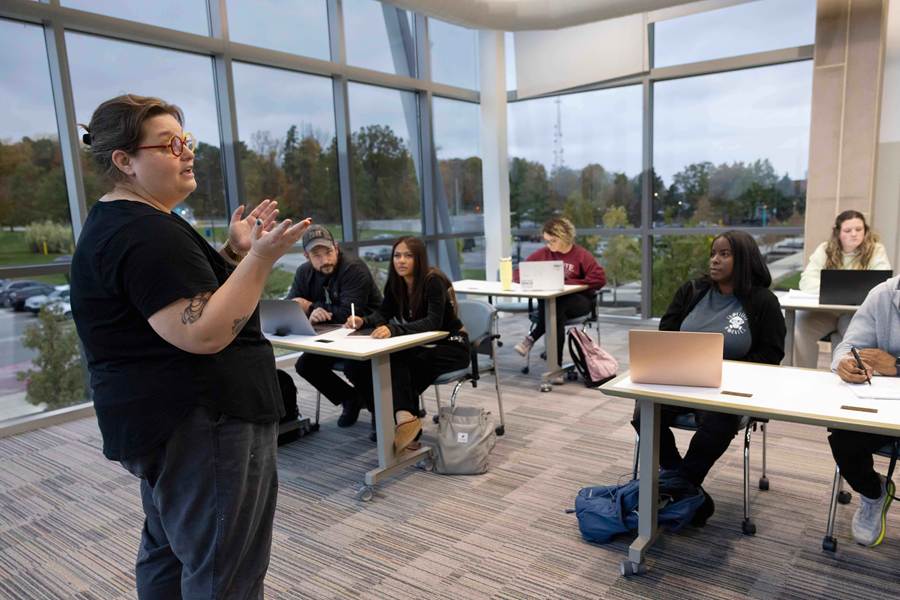
Welcome to AI in Education, a regular feature examining what our grantees and partners are learning about the best uses of artificial intelligence in schools and classrooms.
Our grantee, the League of Education Voters, recently hosted a webinar featuring high school students, a digital education coach, and researchers to discuss how AI is being used in schools right now, what guardrails students and families need, and what skills the workforce will actually require.
- Students are already using AI tools in and out of class, often without consistent guidance from schools on when or how to use them well.
- Panelists identified a gap between districts that have thought through AI policies and those that haven’t, leaving teachers and students making it up as they go.
- Guardrails help students develop judgment about when AI is useful and when it’s not.
Why it matters: If we want to get AI right in classrooms, we need to start with what students are actually doing. Washington schools are at different stages of figuring this out.
- Students are watching and adapting regardless. The sooner schools move from reaction to strategy, the better off students will be.
Watch the webinar: LEVinar: Artificial Intelligence in Education