
What’s next for our Washington state work
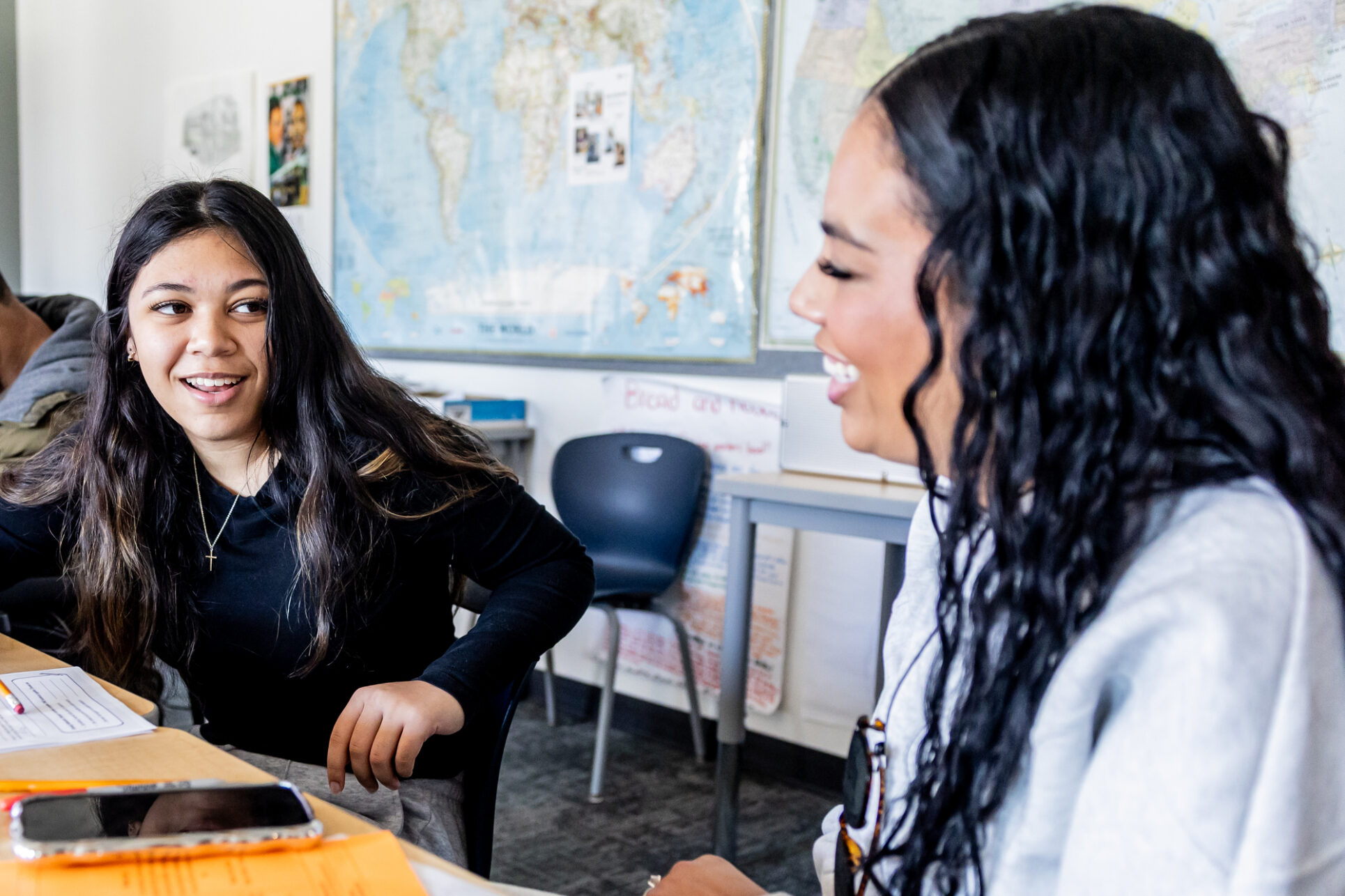
Lucy Lobo, 15, Raisbeck Aviation High School student, and mom, Darcel Lobo, participate in a workshop during CollegeCon 2026, a workshop series and career fair focused on middle school and high school student career and college readiness, at Evergreen High School in White Center, Washington on April 25, 2026.
Partners and friends,
Today, the Gates Foundation is sharing two pieces that describe where our U.S. education work is headed—and I’d like to highlight what that means for the work we do together in Washington state.
The first blog, from U.S. Program President Allan Golston, lays out the long-term strategy our U.S. education work will pursue between now and 2045, which focuses on moments in a student’s journey that research shows matter most: building strong math foundations, navigating the jump from high school to college, passing those critical first-year college courses, and making sure credits count when learners move between institutions.
The second blog describes the organizational structure the U.S. Program has put in place to pursue that strategy—newly structured teams that will be working in a more integrated, aligned way than before.
What this means for our Washington state team
We want to share how our Washington state work fits into this new division-wide structure. First, I want to make it clear that we will continue to invest in Washington state—but how we engage with partners is changing.
This restructuring includes the transition of our Washington State Initiative from a single, standalone strategy into a more integrated approach across our U.S. Program work, as mentioned in our February newsletter. While members of our Washington State Initiative team may be moving to new teams within our U.S. Program division, they will continue to work alongside Washington state partners and invest in the great work happening in our state—while also looking to bring these lessons to other partners across the country.
What comes next for our Washington state strategy
Now that we have clarity on where our team has landed, we are turning our full attention to something we’ve been thinking hard about for months: how we conclude the Washington State Initiative as a standalone strategy and integrate this work more fully into our broader national education work.
Our goal is to leave the education field in Washington state well prepared to carry this work forward—with all the lessons, evidence, and relationships we have built together over the years.
We remain committed to showing up for students and communities in Washington state:
- Our Community Engagement team—a separate team outside our U.S. Program structure—will continue to provide responsive, multiyear grants to nonprofits addressing the most pressing community needs in the Greater Seattle region.
- We will continue to support regional efforts and other catalytic investments in Washington state that align with our national U.S. education priorities.
- We are committed to ensuring that Washington state families have a range of public school options so they can choose the school that best meets their needs. Our support for high-quality public charter schools remains.
As Bill Gates announced last year, the Gates Foundation will close in 2045, ending all of our philanthropic work at the local, national, and international level. We’re trying to be thoughtful about how we can have the most impact before that day comes.
A personal thank you
I shared earlier this year that, by 2030, the Washington State Initiative will no longer operate as a standalone strategy. We also recently decided that our Washington State Initiative will no longer have a sole director. From now until early 2027, I will step into a new role as director for leadership advising, where I will advise on the plans to integrate the Washington State Initiative work and harmonize complementary strategies across the U.S. Program division.
That means this is my last newsletter update, and I want to conclude it with my profound, sincere gratitude. Since I joined the foundation in 2021, I’ve watched people collaborate in new ways and make hard but real progress—including record FAFSA numbers in many regions this year! And I’ve been inspired by students who I know will become the future leaders of this state.
While this will be my last newsletter, I’m excited for you to meet some of my colleagues and our partners who will carry this work forward over the next several years.
I’ve shared that my purpose is to be a good ancestor, and I feel fortunate to have led this work at the Gates Foundation. I know your efforts will make a difference for all the young people with big hopes and dreams in Washington state. You can expect me to continue this work in some way when I depart the foundation—and please don’t be a stranger!
Thank you for your partnership and for continuing to drive transformation for generations of Washington students.
Angela Jones
Director, Leadership Advising