
April 2026: Fund your future
Washington state’s financial aid push
Friends and partners,
Last year, our U.S. Program President Allan Golston visited Southwest Washington and met Gary, a student who had watched his father take on college debt and leave without a degree. Gary wasn’t sure college was for him. His college and career readiness advisor Rory, whose position was funded through our Horizons regional grant program, helped him see a different path. When Gary found out he’d be attending WSU this year to study mechanical engineering—with tuition fully covered through grants and scholarships—he and Rory called his mom together, crying happy tears.
That story stayed with Allan. He recently shared an update on our national education direction: we’re sharpening our focus on the milestones that matter most for long-term economic mobility—including the transition from high school into postsecondary credentials that carry real value in the job market.
That focus is connected to our work here in Washington state. As I recently shared, our Washington State team is moving toward a more integrated structure within the U.S. Program. Washington will keep serving as a testing ground for ideas that travel nationally, and we’re working right now internally to figure out how we make that happen.
In a similar spirit of testing new approaches, on April 20, the Mariners hosted their first Fund Your Future game at T-Mobile Park, with funding support from the Gates Foundation—a first for us. Our team was there, along with hundreds of students from the Horizons regions who completed the FAFSA and earned their ticket to the game. The Mariners’ commitment to this has been real, and this newsletter has more on how it all came together.
With gratitude,
Angela Jones
Director, Washington State & U.S. Charters
Your Future, Funded: WSAC’s statewide financial aid push
Welcome to FAFSA Success Story, a regular feature highlighting innovation in FAFSA outreach and completion efforts
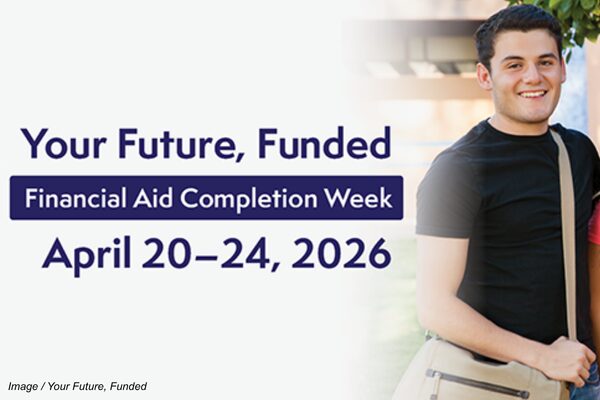
Governor Bob Ferguson and the Washington Student Achievement Council (WSAC) recently launched Your Future, Funded, a statewide push to make sure every high school senior submits a financial aid application before the school year ends.
- Thousands of Washington seniors miss out on college financial aid every year—not because they don’t qualify, but because they never completed the FAFSA or WASFA.
- The campaign has been building through the spring and concluded during Financial Aid Completion Week, which ran last week.
- WSAC also launched their FAFSA Completion League Standings, which lets you compare your school’s FAFSA completion with your sports rivals!
The Gates Foundation provided funding to help WSAC expand awareness and completion of financial aid through a multi-phase, regionally tailored marketing and outreach strategy.
- The partnership combines statewide campaigns (including Your Future, Funded) with region-specific content and local events across our Horizons regions.
- Early results from the digital campaign show strong reach and engagement, including nearly 1 million pageviews on regional landing pages, resulting in increased awareness of the WA Grant and local financial aid resources.
Why it matters: Every student who doesn’t file leaves money on the table. For first-generation college-goers and students from low-income backgrounds, that can be the difference between enrolling and not enrolling. WSAC has a range of resources that students, families, and schools can put to use now.
Find resources at wsac.wa.gov/your-future-funded
Mariners are helping students hit it out of the ballpark
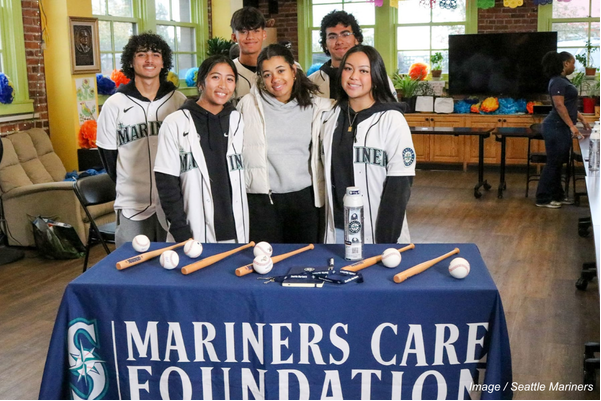
The Mariners, with grant funding from the Gates Foundation, turned their April 20th game into a FAFSA completion event, coinciding with WSAC’s statewide push. Getting there took months of groundwork: a November financial aid workshop for students in their Hometown 9 program (hosted by the College Success Foundation) and sub-grants to five community organizations to help expand their financial aid outreach efforts:
- West Sound STEM Network on the Olympic and Kitsap peninsulas
- The Foundation WA in Southwest Washington
- PSESD and Latino Civic Alliance, working with Foster High School in Tukwila
- United Way of the Blue Mountains in the Walla Walla region
- Quincy AVID in North Central Washington
Most of these organizations used this funding to incentivize students to complete the FAFSA in exchange for tickets to the April 20th game.
- Roughly 500 students and staff attended, with tables staffed by CSF, the Latino Civic Alliance, WSAC, United Way, and the Washington School Counselor Association.
The Mariners will continue to promote financial aid resources on their communications channels and in future games.
Learn more: www.mariners.com/fundyourfuture
What students think about CTE Dual Credit: Focus group insights
Welcome to our Dual Credit Spotlight, a regular feature highlighting research, trends, and bright spots in expanding college access through dual credit programs.
Last year, Career Connect NW ran focus groups with students from regional skills centers, asking them directly: why did you enroll in a CTE dual credit program, what are you getting out of it, and what confused you? Three findings stood out:
- Students enrolled for skills, not credits. Hands-on learning and certifications drove enrollment decisions. Earning college credit barely came up, and most students didn’t even know they were earning any when they enrolled.
- Students wanted to hear about this earlier. Several said they wished someone had told them about CTE dual credit before they entered high school.
- Credit transcription was confusing. Many students assumed credits would transfer automatically to all colleges. They didn’t, and navigating the process across multiple colleges frustrated students and led to lost credit.
The Gates Foundation funds this work to strengthen and scale CTE dual credit by improving regional coordination across K–12, colleges, and workforce partners.
- The goal is to create equitable, high-quality CTE pathways that earn postsecondary credit, align to industry credentials, and improve student access, consistency, and postsecondary momentum across Northwest Washington.
Why it matters: These students are telling us exactly what to fix: tell them earlier, simplify the transcription process, and standardize how colleges award credit. That’s an actionable list, and Career Connect NW is already working to address many of their requests.
- A new report from Career Connect NW highlights the progress their region made in their two-year pilot, which is co-funded by the state legislature.
- The region has seen better alignment and new communities of practice in IT and computer science, while they are still working to overcome credit transcription gaps, outdated data systems, and uneven implementation across districts.
Read the full focus group findings: nwesd.org/news/cte-focus-groups
New research: What happens to WA charter graduates after high school

Graduation rates and test scores are one way to understand what happened to students during school. A new report from Agency tracks what happens after.
- Agency worked with The Harris Poll to survey more than 5,000 Gen Z adults who graduated from public high schools between 2015 and 2025.
Key findings: About three-quarters of recent graduates enrolled in some postsecondary program. But completion rates are low: 48% who pursued a four-year degree finished while 39% started and completed a two-year degree.
- 24% of employed young adults work in service and customer-facing roles, a sector that is shrinking; 12% work in high-paying STEM jobs.
- Charter school alumni earn more (about $22,000 more per year) and complete college at higher rates (7 percentage points more likely than a district public school graduate to hold a degree).
- Charter school students who face the most significant barriers in education—including Black, Latino, Pacific Islander, and Native American students—effectively closed gaps in degree attainment.
- Charter alumni in Washington state reported earning nearly $44,000 more per year than district graduates; sample sizes are small (50–99), so Agency cautions that this should be read as directional.
Why it matters: Postsecondary enrollment is up for Gen Z students, but completion is not—especially in degree and credential programs that lead to good-paying jobs. The students most likely to benefit from a degree are least likely to finish one, with some bright spots in the middle. Agency’s research shows that this is where we need to focus.
Read more: Gen Z talks about life after high school
New tools for counselors: High-quality advising frameworks now on WSCA’s website
The Washington School Counselor Association (WSCA) has added two frameworks from Gates Foundation grantees CARA and Sankofa Consulting to their college and career resources page. Both tools are free and publicly available on the WSCA website.
High Quality College and Career Advising Framework: A progression map covering 9th grade through the summer after graduation.
- This framework shows what students should experience at each stage—from early career exploration to completing enrollment steps after graduation.
- It’s grounded in advising research and aligned to Washington’s specific context, like the High School and Beyond Plan.
Enabling Conditions for Advising: A self-assessment for schools and districts that examines five elements necessary to provide high-quality advising to students: Vision, Allocating Resources, Partnerships, Capacity to Support Students, and Data and Continuous Improvement.
- Each element includes readiness levels so teams can see where they stand and identify next steps.
Why it matters: Students deserve an adult who knows them well, personalized information on their college and career options, and support through the application and enrollment process. These tools can help schools build the conditions to make that happen consistently—not just when a student is lucky enough to find the right counselor.
Learn more: https://waschoolcounselor.org/College/Career-Resources
April is National Volunteer Month, and local nonprofits need you

The need for nonprofit services is rising, but the volunteer base that fuels their work hasn’t kept up. April is National Volunteer Month, and it’s a great time for nonprofits to recognize their volunteers and for community members to explore volunteer opportunities.
- Washington state food banks served 13.4 million visits in 2024, up from 7.8 million before the pandemic.
- Volunteer roles that were paused during the pandemic reopened—but the volunteers didn’t fully return.
Our Community Engagement team funds organizations across King, Pierce, and Snohomish Counties doing direct service work in housing, food access, community development, and more. Many of them have open volunteer needs right now.
- About one-third of all nonprofit workers nationally are volunteers. When that pipeline slows, paid staff absorb the difference or programs decrease.
- For example, Northwest Harvest volunteers contribute roughly 150,000 hours per year, the equivalent of 50 full-time staff. That’s what’s at stake when the volunteer numbers fall.
Why it matters: The organizations in our grantee network are serving more people with fewer resources. Volunteers can’t solve everything, but they can help close the gap. April is a good time to explore volunteer activities and highlight this need with your networks.
Find a volunteer opportunity: National Volunteer Month: Local organizations looking for volunteers