
Meet Education Northwest, the new Limitless Learning Network manager
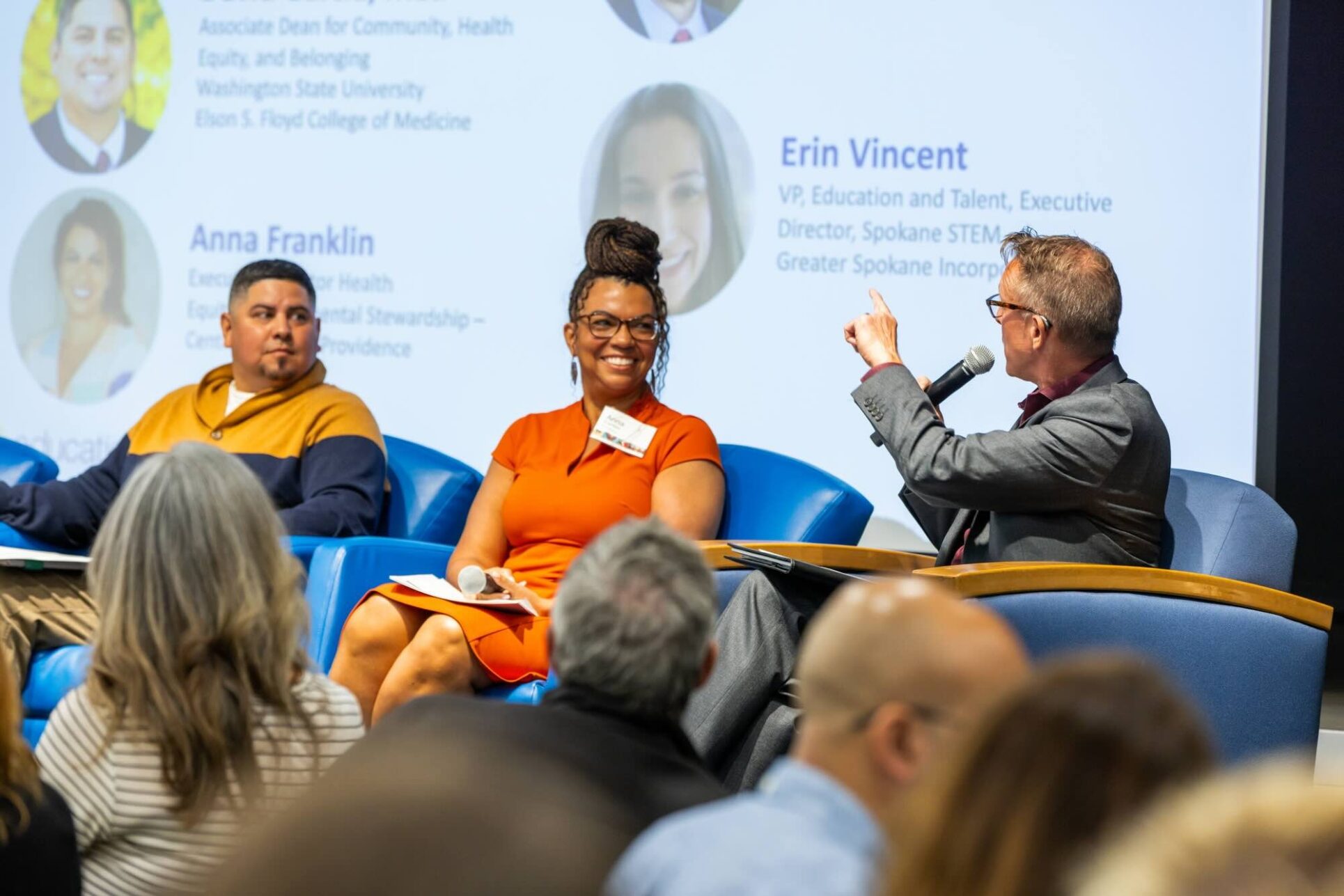
Moderator Mark Mattke, CEO of Spokane Workforce Council, presents Spokane workforce panelists David Garcia and Anna Franklin at a Limitless Learning Network convening in Spokane, Washington on April 25, 2024. Photo by: ©Bill & Melinda Gates Foundation/Martina Machackova
When the Gates Foundation was exploring a new statewide education strategy in Washington state, we talked to nearly 300 community members to get their input. One thing we heard over and over: help us come together and collaborate with one another. There is great work happening across the state. Let’s not duplicate our efforts.
That’s why we provided funding to launch the Limitless Learning Network in 2023, which brings 26 local partnerships together to collaborate and explore new ways to support students in Washington state. Between the 2023-2027 school years, Limitless partnerships will convene in person and virtually to share information, explore new ideas, and develop best practices to help more young people design the future they want.
After asking Education First to help launch and incubate the Limitless Learning Network in its first year, we set out to find a permanent Limitless Learning Network manager earlier this year. We’re excited to share that Education Northwest will be filling this role.
What made this work so intriguing for Education Northwest? And what will they bring to this community? We caught up with Leanne Davis, Education Northwest’s managing researcher in postsecondary success, to get answers to these questions. Here’s what she told us.
What drew you to want to take on the role of the Limitless Learning Network Manager?
We were drawn to this opportunity because it aligns so closely with our organizational values and our deep commitment to the communities involved.
As an organization, we are committed to addressing systemic inequities in educational and economic opportunity. Earning a degree or training credential beyond high school is crucial for individual development and career growth, yet only about half of Washington high school graduates enroll in postsecondary programs. Black, Latino, and Indigenous students and students from low-income backgrounds or rural communities face the highest barriers. Even with one of the most generous state financial aid programs in the country, Washington ranks 47th in FAFSA completion, and prospective students leave millions of dollars of unclaimed aid on the table. These opportunity gaps cannot be addressed by institutions or districts alone—they demand a larger community effort. We believe the Limitless Learning Network is pivotal to building the relationships we need to move the needle on postsecondary outcomes in Washington.
We are also excited about Limitless because of its unique emphasis on engaging and supporting practitioners. Our team members have worked as practitioners in K–12 and higher education, so we understand firsthand the postsecondary transitions landscape and challenges and opportunities to advance equity.
Finally, we see the Limitless initiative as a way to give back to our community. Several of our team members call Washington home, and we are excited to lead this important place-based work in our home state. We already work with several Limitless partners and know how much they appreciate being a part of this network. We are excited to support them with our knowledge, relationships, and lessons we’ve learned working across Washington and across the country. Limitless is poised to close educational equity gaps in our state, and we want to help that vision come to fruition.
Tell us about some of your experience working in Washington state. What are some things you’ve learned about the state and its diverse regions?
Education Northwest has worked in Washington since 1966, when our organization was founded as the Regional Educational Laboratory Northwest. For nearly 60 years, we have worked in partnership with the Washington Student Achievement Council, Office of Superintendent of Public Instruction, educational services districts, K–12 and higher education practitioners, Tribes, and community-based organizations on research, evaluation, professional development, and learning design projects across Washington. For example, we built districts’ capacity for implementing social-emotional learning, researched promising practices for diversifying the educator workforce, led a networked learning community of small rural districts, supported parent-led inclusion efforts for students with disabilities, and developed a dual credit guide for districts. We have also co-led projects with the Washington Student Achievement Council, State Board for Community and Technical Colleges, and individual institutions to improve postsecondary access and success, create streamlined pathways into postsecondary, support STEM degree completion, and ensure students’ basic needs are met.
Beyond our collective experience, several Education Northwest staff members—including those on the Limitless team—live in Washington. We have worked in Washington schools, attended Washington universities, and sent our kids to Washington schools. Education Northwest’s board of directors is even chaired by a Washington superintendent. Our lived experiences in Washington schools and communities give us important context and relationships that strengthen our work.
From all our experiences in Washington, we have learned that place-based work is critical. What works for students in Seattle will not necessarily meet the needs of students in Chelan or Clark counties. On top of that, we know that it’s critical to engage local communities in efforts to drive change. Students, parents, and community members know best what supports they need and what community assets we can leverage to help students meet their postsecondary goals. When communities lead, the work is more relevant and sustainable.
At Education Northwest, we prioritize the insights of students, families, and practitioners who are on the ground in schools and postsecondary programs. We see our role as helping practitioners in diverse and distinct communities to identify and implement locally relevant, evidence-based strategies that improve the experiences and success of their own students.
You’ve worked with a lot of similar learning communities and networks. What do you enjoy most about this work?
We love this work because every learning community is different. Our team may lead the learning community, but we learn so much from our participants. Each network convenes different people who bring distinct lived experiences, background knowledge, and problems of practice to the table. And that’s what makes this fun! We enjoy collaborating with all the various partners involved to coordinate, develop content for, and execute high-impact learning networks that build capacity for sharing information, exploring new ideas, and implementing and refining effective practices together.
In addition, we appreciate working at the confluence of practice and theory. We share research and evidence with practitioners on the ground, but at the same time we get to lift up promising practices from our network participants to share more broadly with the field. It is extremely rewarding to connect practitioners and researchers who are all doing critical work to support students.
Why do you think Education Northwest is poised to lead this work for the next three years?
We believe our strong relationships in Washington, extensive experience leading this type of work, and equity focus have primed us to lead the Limitless Learning Network. We have experience in each of the different roles involved in the network—practitioners and researchers, technical assistance providers, and evaluators. We bring all the lessons we’ve learned along the way about what it takes for this type of effort to be successful. Importantly, we are also eager to learn from Limitless participants and apply what we know to support them.
Our team is deeply invested in addressing educational equity in our home region of the Pacific Northwest and advancing outcomes for youth of color, youth from low-income households, and linguistically diverse youth. Our existing partnerships across Washington, including 19 active projects, will bring essential knowledge and experiences to Limitless, and we will build on an established relationship of trust to accelerate the learning.
Our extensive experience working on postsecondary access and success—and on educational equity in Washington—will help Limitless achieve its goal of closing educational equity gaps in the state. We have the experience, capacity, and values needed to lead the learning network and partner with educators, policymakers, and communities to use evidence to solve educational challenges and improve learning.
What are your organization’s goals for the Limitless Learning Network?
In one sense, our goals for the network are also the goals of the network itself: improving participants’ capacity to drive cross-sector outcomes, curating access to strategies that help more students enroll in postsecondary programs, closing equity gaps in postsecondary enrollment, and improving data use and literacy.
As network leaders, we also care about the experiences of network participants. We want them to feel like the network was a high-quality experience and a valuable use of their time. We want participants to learn and grow, feel supported and empowered, and build meaningful relationships that help them sustain their work for years to come.
On a broader scale, we want the learning network to lead to better outcomes for Washington students. We hope that improving systems conditions for postsecondary transitions will have a lasting impact on students for generations to come.
Read next
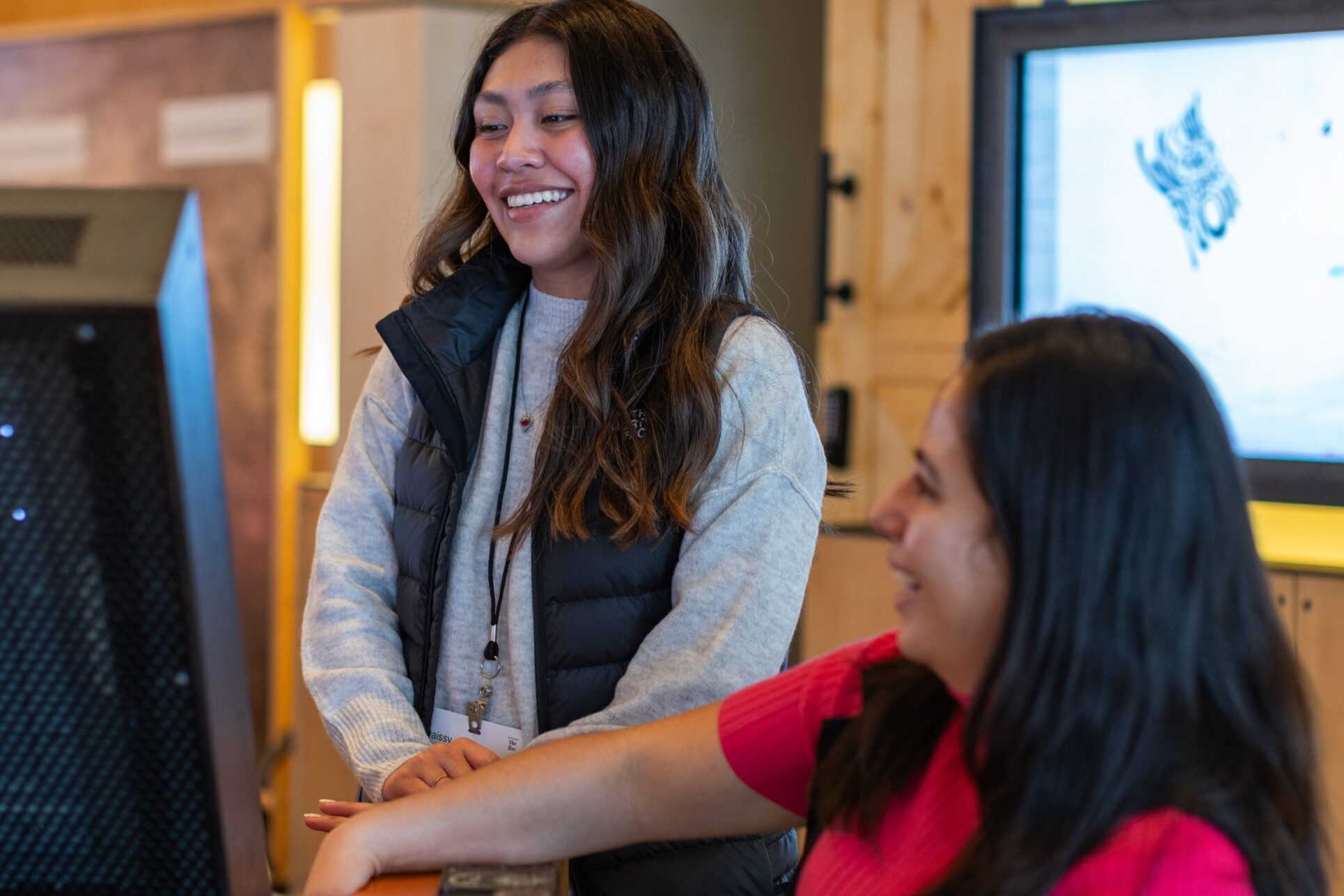
Meet the four regional partnerships helping students explore postsecondary pathways in Washington state
The Horizons program is supporting four partnerships that are ready to expand programs to help more students design the future they want.
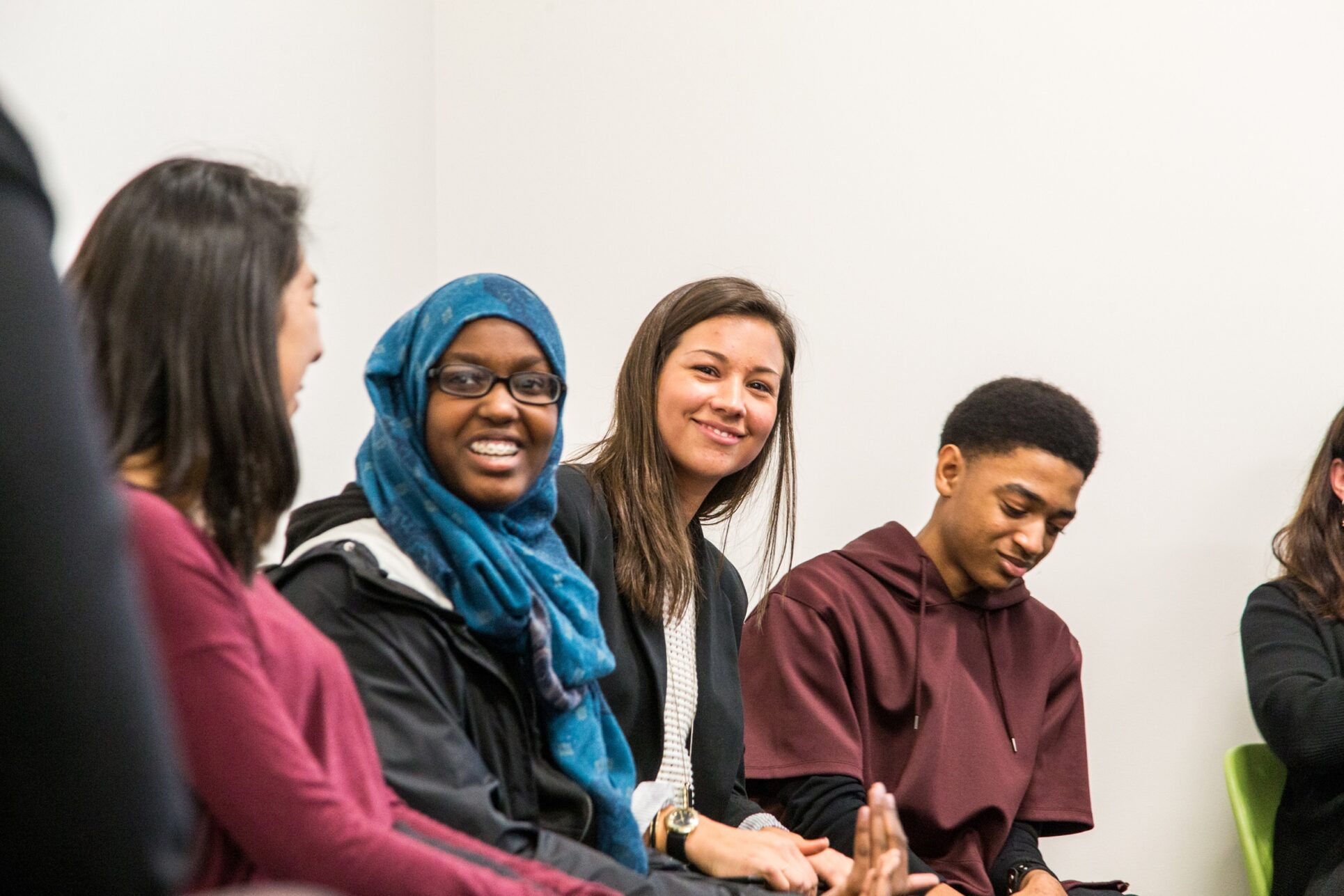
Key components that support effective high school advising
The Gates Foundation’s Washington State team worked with the consulting firm, Kinetic West, to identify four critical components for effective high school advising.
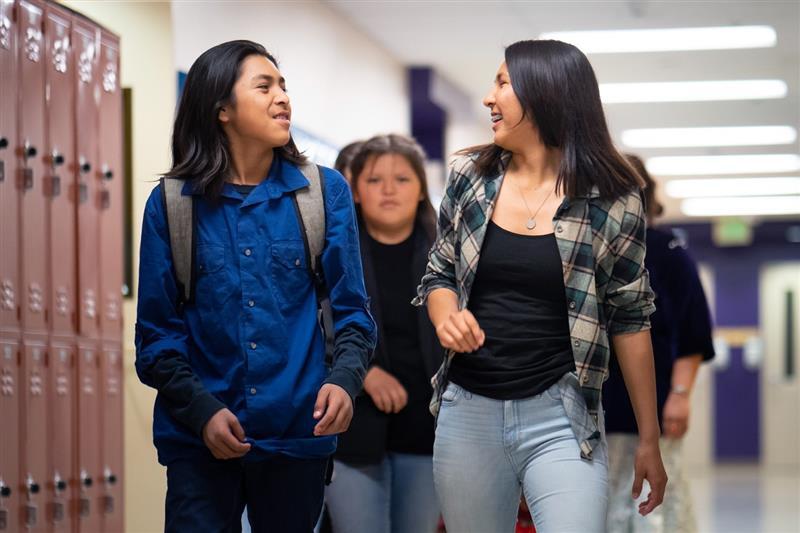
Our Work in Washington State: Supporting Local Partnerships
This fact sheet details how the Gates Foundation partners with local organizations who know their communities best to understand how we can support on-the-ground efforts to improve the high school to postsecondary transition for students in their region.