
October 2026: 3 things that move students toward college
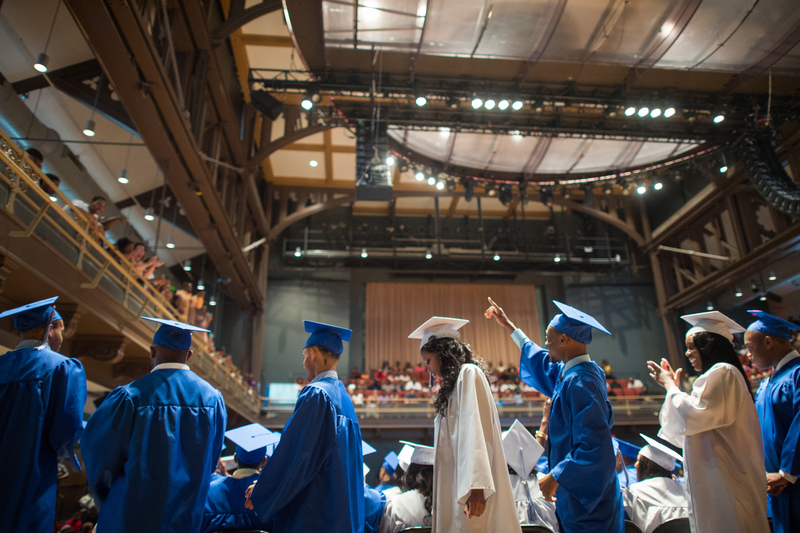
Across Washington state, nearly 70,000 seniors graduate from high school each year, and many of them hope to continue their education. That aspiration is at the heart of the Gates Foundation’s U.S. Program goal: help 10 million more students in the country earn a credential of value by 2045.
Our partners in Washington state are working alongside students and families to turn those plans into reality. Today, only about half of Washington’s graduates enroll in a postsecondary program, which means there’s real opportunity to close the gap between what students want and what’s within their reach.
We believe that closing this gap takes three things working together. The state needs to pull in one direction. The people who support students need timely information to see where students are stalling. And every student needs a trusted adult to help with the next step.
You’ll find all three components in this newsletter, plus a new opportunity for Washington school systems to join a statewide AI learning network and a preview of the WERA/OSPI Winter Conference. We’re proud to support partners who are leading this work in Washington state.
One plan for Washington’s education-to-career pathways
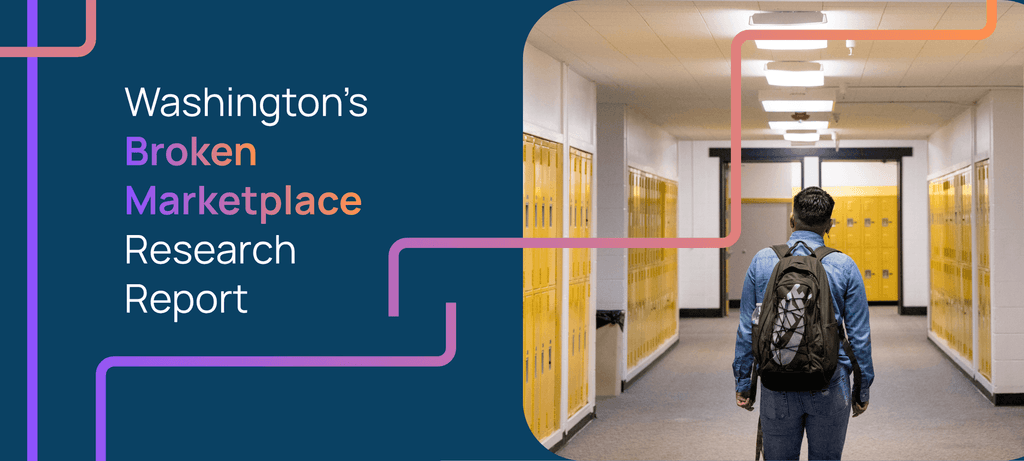
The League of Education Voters recently hosted a LEVinar that highlighted a new Washington STEM report about how young people move from high school into careers.
- The statewide study was conducted with HarrisX Research and supported by the Schultz Family Foundation.
- It drew on nearly 3,000 surveys, plus interviews and focus groups with young adults, parents, counselors and advisors, and employers.
The big picture: Washington has strong programs, but young people struggle to find and access them. Awareness of programs like Running Start and career fairs runs about four times higher than participation, and more than 9 in 10 respondents named at least one barrier, such as not knowing where to start, whom to trust, or whether they qualify.
- Young adults’ confidence in their career readiness dropped 21 points once they left school, and parents’ dropped 29 points.
- Just under half of respondents knew that the Washington College Grant, one of the nation’s most generous financial aid programs, can cover costs beyond tuition.
- Employers, meanwhile, said they want to partner with schools but need a simpler way to do so.
Why it matters: Too many Washington students lack equitable pathways from high school to family-sustaining careers, which deepens the state’s economic divide. The research indicates this is not due to a shortage of programs but rather a navigation problem.
- As one student panelist put it, a single conversation with a counselor led her to a course that shaped her path to teaching.
- The LEVinar concluded by recommending that partners use the High School and Beyond Plan to track whether students are reaching their goals, build regional outcomes dashboards, train counselors and teachers on Washington’s pathways, and map employer-led career pathways region by region over the next year.
Watch the recording: Fixing the Broken Marketplace: A Statewide Look at Washington’s Education-to-Career Pathways
ERDC’s data strategy gets a national case study
Mathematica featured Washington’s Education Research and Data Center (ERDC) as a case study in building a strong postsecondary data strategy.
- This work was supported by the Gates Foundation to complement ERDC’s efforts to modernize their data system.
- As Mathematica highlighted, ERDC knew that in addition to linking records across institutions, states also must decide which questions their data should answer and which outcomes matter most.
What ERDC did: ERDC started by mapping its existing data to the Education-to-Workforce Framework (E-W Framework), separating what it could already measure now from what needed new data sources or new partnerships.
- ERDC already had data and reporting capabilities related to postsecondary persistence and retention, transfer, and dual credit. In 2025, they added capacity to connect the state’s postsecondary and workforce data, including wage records and occupational codes
- ERDC used these new data connections to expand conversations about postsecondary value—pointing toward broader outcomes around workforce success like quality jobs, job stability, and upward mobility
- The E-W Framework also helps when regional partners request data, as ERDC can weigh each request against other indicators that would deepen the analysis.
Why it matters: ERDC’s approach lets our state ask whether learners finish and earn a living wage, and also whether their paths lead to a good quality of life, economic stability and mobility, and meaningful opportunity.
- One ERDC staff member said the E-W Framework has pushed the team toward questions “we weren’t able to answer before.”
- The Commission on Opportunities after High School also named Washington’s P20W Data System one of the top 100 promising practices in the country—further recognizing ERDC’s nation-leading work.
Read more: Building Washington’s Postsecondary Data Strategy
See the WA Data Hub live on Nov. 2

WSIPC and Elevate are hosting a webinar on Monday, Nov. 2 (that’s today at 12:30 p.m. PT!), to highlight how one region is using the WA Data Hub to better support their students.
- Elevate is a collective impact organization in rural Southeast Washington and one of the regional partnerships in the Gates Foundation’s Horizons Regional Grant Program.
The big picture: Thanks to ERDC (see above!), Washington state already has strong state-level preschool-to-workforce data. However, districts and regions still struggle to get timely, usable information into the hands of the people making local decisions in school buildings. The WA Data Hub, powered by WSIPC, is being built to close that gap.
What it is: The WA Data Hub pulls a district’s student information system (a secure digital vault with essential school records like grades, attendance, and schedules), assessment files, and other K-12 data into one standard format.
- The standardized data sits in a secure warehouse that is entirely under the district’s control but housed in a secure environment at WSIPC.
- Standardizing data is just the start. Once data is in a common format, districts can use open-source tools to do things like build K-12 dashboards and securely send student records directly to colleges, replacing 250+ different transcript variations
- And while it’s separate from the WA Data Hub, WSIPC also supports FOYOST and can help districts and the state understand what happens to students after they graduate from high school.
What you’ll see: Elevate will share how it built a low-cost advising data system, connected it to the WA Data Hub, and is using it to improve student outcomes. Participants will see how the system:
- Saves staff time and stays up-to-date automatically using Ed-Fi, a common language that lets different school data systems talk to each other.
- Elevate will also share how their system ensures advisors can see in real time which students may need extra support
Why it matters: Districts can be “data rich, but information poor,” meaning they have data stored in their systems but often lack the time and resources to connect and analyze the data to tell meaningful stories.
- Elevate’s work shows what that connection can look like in practice, and how a rural, collaborative effort can use data to see which students are getting advising support and which are being missed.
- Open-access tools that help educators use real-time data can bridge this gap, leading to better data capacity and, ultimately, better support for students.
- Other states, like Indiana and Michigan, have seen a clear value and return on investment in their data systems.
Register for the webinar: Advancing advising quality through the Washington Data Hub
Save the date: WERA/OSPI Winter Conference
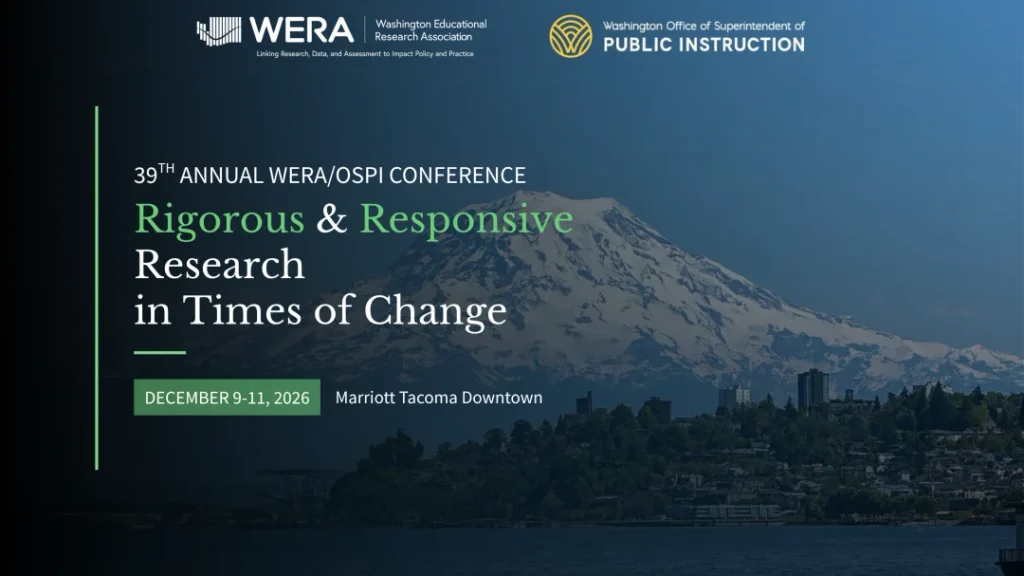
Registration is open for the annual WERA/OSPI Winter Conference, which runs Dec. 9–11 in Tacoma. This year’s theme is Rigorous & Responsive Research in Times of Change.
- Zaretta Hammond, author of Culturally Responsive Teaching & the Brain, and Victor Lee, a Stanford professor who works on AI and education, will lead pre-conference sessions and give keynote presentations.
Several sessions will focus on the high school-to-postsecondary transition.
- ERDC will look at where dual credit is available and who enrolls, and a Mount Baker counselor will share how the High School and Beyond Plan became a real system of support for rural and first-generation students.
- The West Sound STEM Network, one of our Horizons regional partnerships, will explain how regional data partnerships improve postsecondary access on the Olympic and Kitsap peninsulas.
- MDRC, in partnership with Washington Student Achievement Council, will highlight how to identify the 12 pathways Washington students take after HS graduation.
Researchers and practitioners will also touch on data and new tools available to support students.
- OSPI will cover how schools are using SchooLinks, the platform Washington schools now use for the High School and Beyond Plan.
- Researchers will highlight several findings from their analysis of education-to-workforce data.
- OSPI, the Center for High School Success, and SchoolData Solutions will demo the Ninth-Grade Success Homeroom Dashboard, a real-time early warning system.
Register: WERA Winter Conference
Apply to join Washington’s new AI learning network
Playlab, with Gonzaga University as a regional partner and support from the Gates Foundation, is launching the Washington State AI Innovation Ecosystem project.
- This new statewide learning network will help school systems build their own AI capacity and shape how Washington uses AI in teaching and learning.
- More than 55 districts and schools in other states are already participating in similar Playlab-run ecosystems. Now, Washington state gets the opportunity.
Any Washington state district, school, or charter can apply, and roughly 10 school systems will be selected.
- Each partner will start building their AI strategy and implementation plan with Playlab and Gonzaga at a Launch Convening, then will join a peer network with two additional in-person convenings.
- Playlab’s support will touch on topics like AI strategy matched to specific school goals, professional learning for educators, student and family programming, and help building custom tools.
- Applications close Nov. 6.
Why it matters: As we covered last month, educators and districts are at very different stages when it comes to AI, with some school districts rushing to make decisions without evidence. This new opportunity gives Washington state school leaders funding support to create a plan and a network of peers to learn from.
Learn more: Playlab’s Washington State AI Innovation Ecosystem Project
What We’re Reading
- Making Dual Credit Count: Moving beyond participation to student success, Education Northwest
- Q&A: Highline’s Teshon Christie takes a strategic approach to ed tech adoption, EdTech Magazine
- Some College, No Credential: Students who leave college before graduating are an untapped resource, MDRC and WSAC