
September 2026: Educators put AI to the test
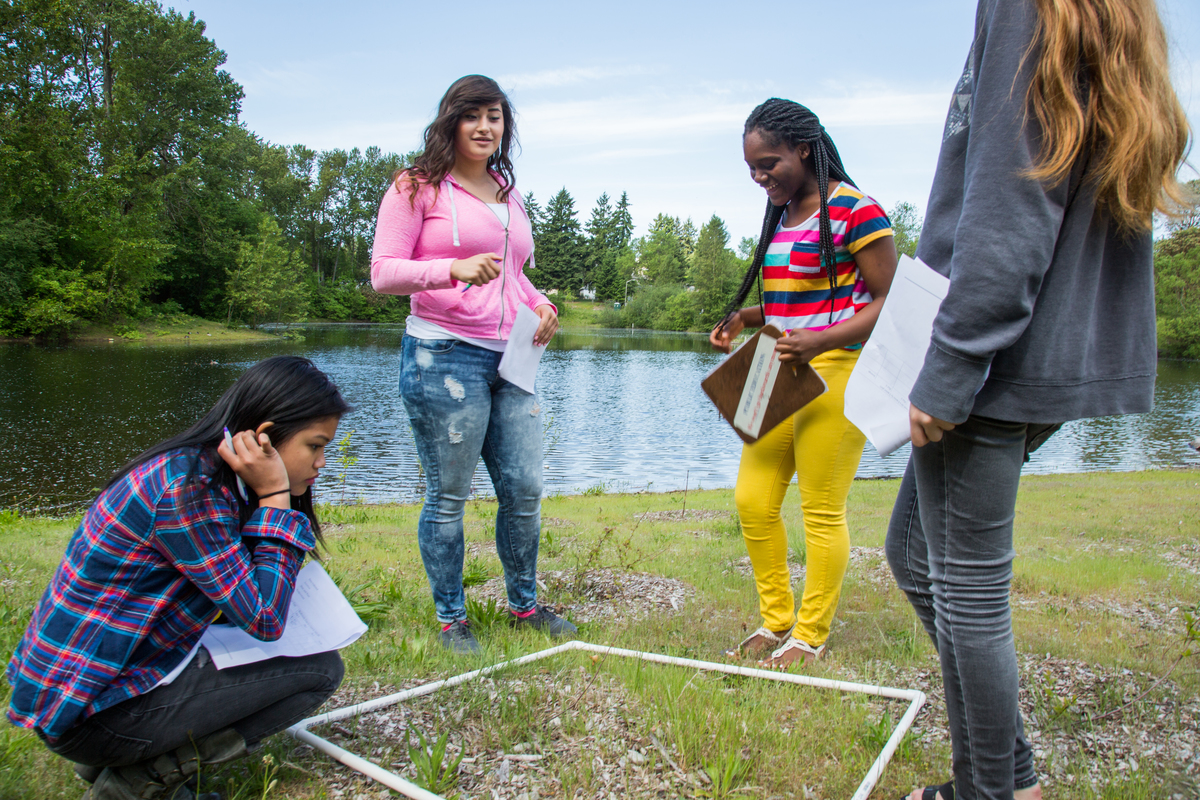
Students during a field study at Evergreen Campus of Health Sciences & Human Services High School (HS3) in Seattle, WA on May 20, 2014.
When Maria Lucero, Yakima School District’s director of teaching and learning, first encountered AI in the classroom, she wasn’t really that eager to embrace it. Three years and hundreds of teacher pilots later, she is now asking what’s possible with AI and how it can support teaching and learning.
As she told the Yakima Herald-Republic in May, it’s not because this emerging technology has solved everything, but instead because “we have to evolve.”
Lucero’s experience is one side of what’s playing out in school district offices, where leaders are asking: can AI make their systems work better and make data easier to find and use? Districts are moving fast to answer that question. A CoSN survey of school district leaders found 88% now have some kind of AI initiative underway.
But guidance at the district level doesn’t always mean clarity at the classroom level. A Gallup survey found that roughly 8 in 10 teachers receive no formal guidance on how to use AI tools.
To address both challenges, the Gates Foundation is supporting work in Washington state that starts with listening to what teachers and students need in their classrooms and what district leaders need in their systems, then follows with grant funding that helps them put those ideas into practice.
In this issue, we highlight two grantees who are leading this work. We also explore new data on the paths students take after high school, a regional dual credit database, and Washington’s record FAFSA numbers.
Helping school districts explore AI solutions to meet their data needs

Today, student information sits on separate platforms. Attendance, academic progress, and postsecondary planning data don’t always talk to each other. Central office staff can’t easily get the information they need to make decisions. It can be difficult to understand how individual students or groups of students are doing in real time. These aren’t new problems, but AI presents new opportunities to address them.
What’s happening: Earlier this year, 10 Washington school districts gathered to kick off a new Gates Foundation-funded AI community of practice alongside several school districts participating in a similar program with Microsoft.
- The foundation-funded cohort, led by the Center on Reinventing Public Education (CRPE) and Education First, focuses on the critical challenge of improving school district data systems.
- CRPE and Education First started by working with these 10 districts to explore key questions: What are each district’s most pressing data and operations challenges? What capacity do they have to address them? What tools could help?
- From there, districts received coaching and peer support to go deeper on these questions and explore potential solutions.
What comes next: Seven districts were recently selected for the second phase of this work: Ferndale School District, Highline Public Schools, Impact Public Schools, Kalama School District, Sequim School District, Summit Public Schools, and Yakima School District.
- Each district will receive a small grant (up to $45,000) to pilot the solution they chose to support their data system or operational needs—building on the work they completed in the first phase.
- Over the course of this school year, each district team will receive customized coaching and capacity-building support to implement their chosen approach.
- CRPE will pull together lessons about what districts are experiencing on the ground and engage state leaders about how these lessons can help shape the ways AI gets used in Washington schools more broadly.
Explore further: Want to learn more? Join CRPE and Education First for a webinar on Friday, September 18, that will focus on early lessons from this work.
Helping teachers navigate AI in education
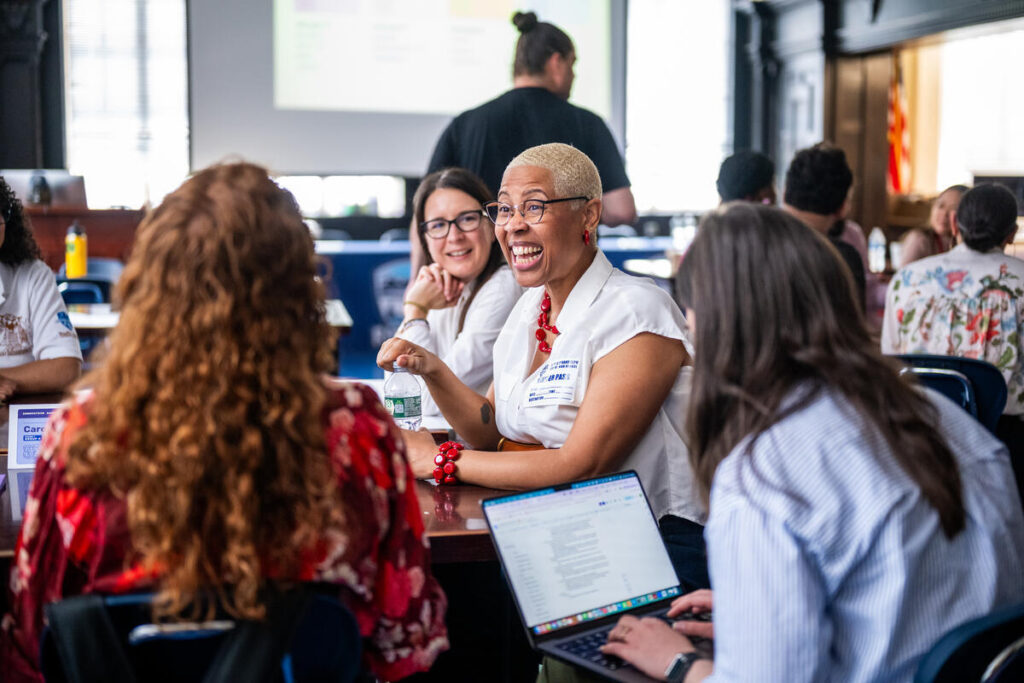
At the Mead School District just outside Spokane, Courtney Bock leads AI workshops for teachers because she believes that, when used responsibly, “AI can be a really, really powerful tool for everybody.” Bock was one of the first educators accepted into a new Gonzaga University fellowship that aims to help educators like her explore the role AI can play to support teaching and learning.
- The AI for Instruction Fellowship, funded by the Gates Foundation, brought roughly 80 Washington educators together last year to explore purposeful, responsible, and practical ways to use AI in their teaching.
- More teachers will participate in their “Navigating AI in Education” training this school year, where they will deeply consider purpose, agency, and learning while developing and deploying AI tools to enhance teaching and learning.
Why it matters: As Gonzaga University professors Anny Fritzen Case and Jay Yang told Spokane Public Radio, teachers need more than a list of prompts and pre-built tools. Educators need to develop shared understanding within a professional community of practice to determine where AI technologies can productively and ethically support both educators and students.
- The point, according to Yang, isn’t to get every teacher using AI. It’s to help them gain AI literacy so they can decide where technology does and does not have a role to play in solving educational problems and exploring new possibilities.
- Case added that schools can’t repeat the same mistake of leaving kids to navigate new technology unsupervised the way they did with social media.
What comes next: Later this year, Gonzaga will provide small grants to educators from their 2026 cohorts, allowing them to further pilot and explore how AI-enabled tools could support their teaching.
- When this fellowship wraps at the end of this school year, Gonzaga will disseminate research findings and promising practices to inform AI use in education across Washington state.
Learn more: AI transforms classrooms as teachers and students learn safe practices
Which postsecondary pathways are Washington students taking?

Fewer than 1 in 5 students in Washington state are following the “once-normative” pathway that leads from high school directly to a four-year bachelor’s degree program and into the workforce.
- That’s one of several findings from MDRC’s Sequences to Success in Washington State project, which the Gates Foundation funded.
- MDRC used data from the Education Research & Data Center (ERDC) to map the school-to-work trajectories of nearly 64,000 students who were freshmen in 2013 and graduated in 2017.
- MDRC paired this quantitative analysis with interviews to help deepen their understanding of the challenges impacting students’ transitions.
Key findings: MDRC collaborated with the Washington Student Achievement Council (WSAC) to identify the 12 most common pathways after high school and look at the employment and income patterns for these pathways using ERDC’s data.
- MDRC found that many students are enrolling at community and technical colleges.
- In addition, certificate pathways lead to relatively high rates of employment and earnings, which may be viable options for students who need a shorter postsecondary option.
- The most-traveled pathway (29% of students) was taken by students who enrolled in college but left before earning a credential. If our state can help increase credential attainment among this group, it could have a profound impact on WSAC’s goal to see 70% of Washington state adults (ages 25-44) hold credentials.
Why it matters: Today’s young adults face an increasingly complex array of pathways after high school, making it harder to build one-size-fits-all support. While many leaders still tend to talk about a single “college path,” MDRC’s data points to dozens of distinct pathways, each with its own risks and payoffs. Knowing where students on these different pathways tend to stall helps us target our support instead of guessing.
What’s next: The research team will be publishing additional briefs and posting their methodology and code publicly on GitHub in the coming months.
Explore MDRC’s data: Sequences to Success in Washington State
NWESD launched Regional CTE Dual Credit Database
Welcome to our Dual Credit Spotlight, a regular feature highlighting research, trends, and bright spots in expanding college access through dual credit programs.
Congratulations to NWESD, who recently launched a Regional CTE (Career & Technical Education) Dual Credit Database to help students, families and counselors navigate the dual credit options available for CTE courses.
- The database focuses on schools in Island, San Juan, Skagit, Snohomish, and Whatcom counties, with plans to expand in the future.
- This tool can be filtered by school district, high school, credit type, career cluster, and college.
What this means: Students and families in the region can now explore available CTE dual credit opportunities in their high schools and see how those credits transfer to specific college programs if they want to continue exploring a particular career pathway.
- Many students may discover programs they weren’t aware of, and they may even consider pursuing a four-year degree that their community college now offers.
- School counselors can use the database to advise students on CTE courses tied to their career interests.
- Meanwhile, CTE directors and staff can compare classification codes for CTE courses across districts to identify new articulation opportunities to pursue.
Why this matters: CTE is one of the most accessible dual credit options in our state, but only about 3% of these courses are transcribed into a credit-bearing postsecondary credential, causing many students to miss cost-saving opportunities.
- That’s primarily because the articulation agreements vary so widely between local high schools and the postsecondary institutions nearby.
- Three years ago, spurred by a CTE Dual Credit proviso issued by the Washington State Legislature and additional grant funding from the Gates Foundation, NWESD began work to address this.
- Over the last three years, NWESD has worked with local community colleges and school districts to improve CTE credit transferability and ensure stronger coordination between high schools and colleges.
- This new CTE dual credit database, which will be updated yearly, is the next step in this collaboration.
Check it out: NWESD CTE Dual Credit Database
Washington’s Class of 2026 sets a new FAFSA record
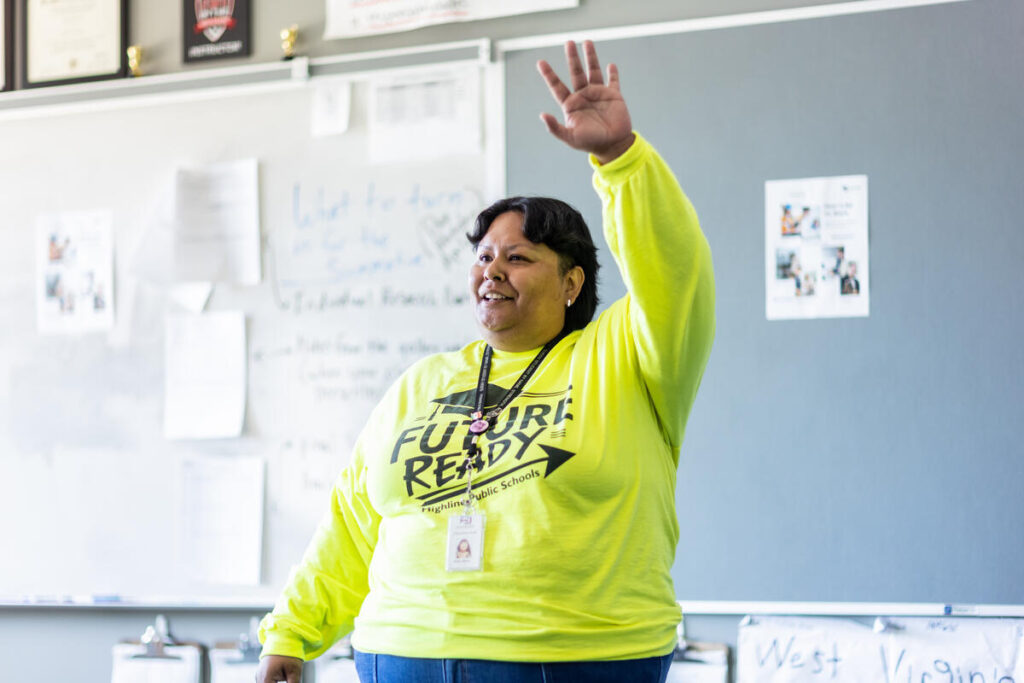
Welcome to FAFSA Success Story, a regular feature highlighting innovation in FAFSA outreach and completion efforts.
As the Washington State Standard highlighted, Washington state high schoolers just broke their own financial aid record for the second year in a row. More than 46,000 seniors completed the FAFSA or its state equivalent, the WASFA, topping the state’s goal and last year’s mark of roughly 44,000.
- Last year, Gov. Bob Ferguson launched a FAFSA completion campaign. This new push complemented work that’s been happening on the ground over the last several years to meet more students and families where they are and help them complete the financial aid form.
- For example, the four Horizons regions the Gates Foundation supports saw a 10% increase in FAFSA completion in 2024/25—and while they are still looking at their data from the most recent school year, we know those numbers are even higher.
- The Spokane Teachers Credit Union also trained its staff to talk with families about financial aid and help them complete the form, and the Seattle Mariners hosted a financial aid awareness game in April.
- The Washington Student Achievement Council also continued its efforts to train more than 1,500 people through the state’s Your Future, Funded initiative, and WSAC is now digging into whether more completed applications are translating into more students enrolling in college.
Why it matters: Washington previously ranked 47th nationally for FAFSA completion. This year, our state climbed to 40th. While we still have much higher goals, this is evidence that we’re making progress—and that’s worth celebrating.
Read more: Completed student aid applications hit new high mark with WA’s Class of 2026
What We’re Reading
- Beyond Educational Access: Inequities from FAFSA filing to postsecondary attainment, WSAC
- Enhancing student agency through school AI councils, Brookings
- Regional educators collaborate at ESD 112 to strengthen postsecondary pathways, ESD 112
- Washington state Teachers of the Year on Supporting Students to be Future-Ready, League of Education Voters