
Uniting for Limitless Learning: How Education First launched a diverse learning network in Washington state
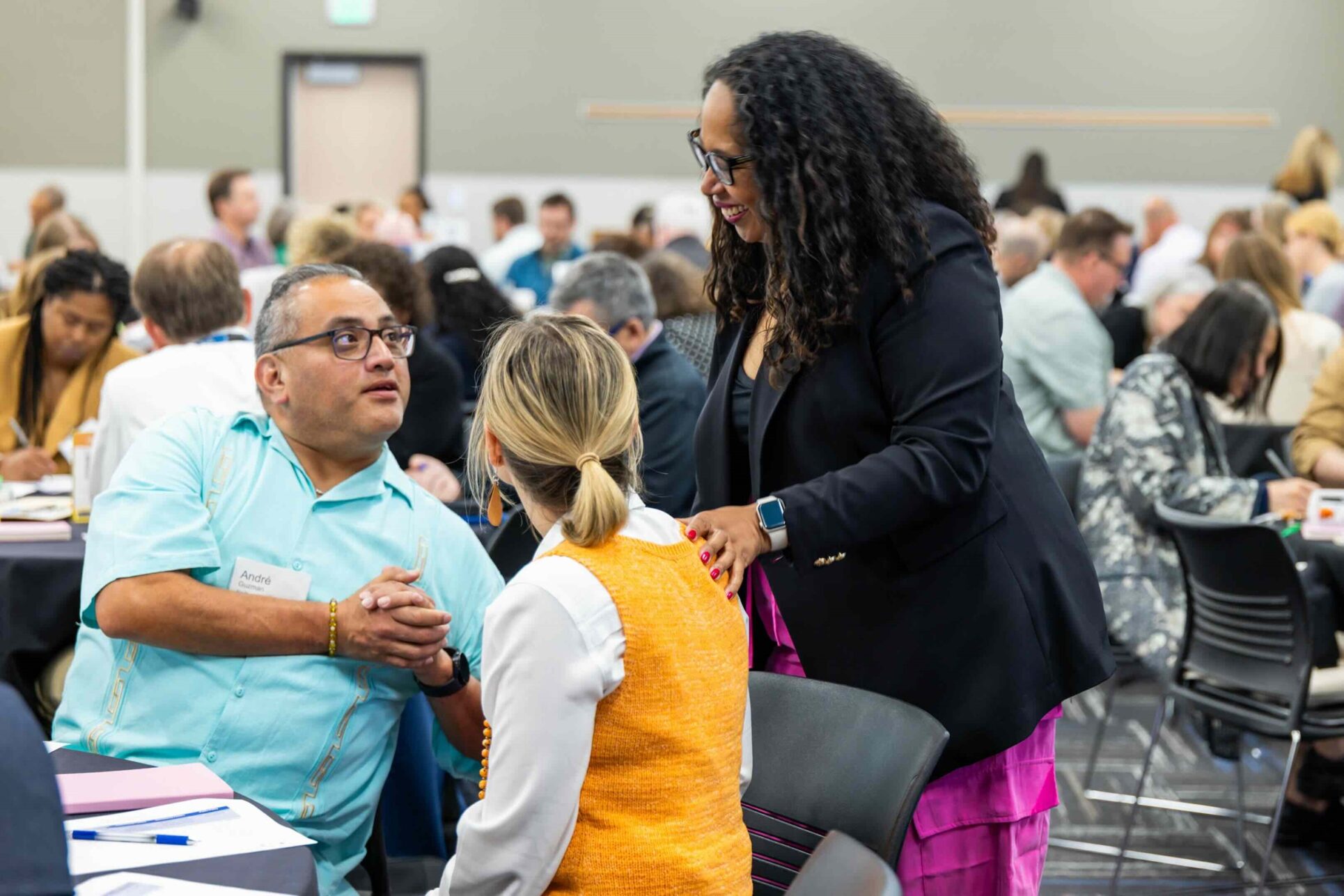
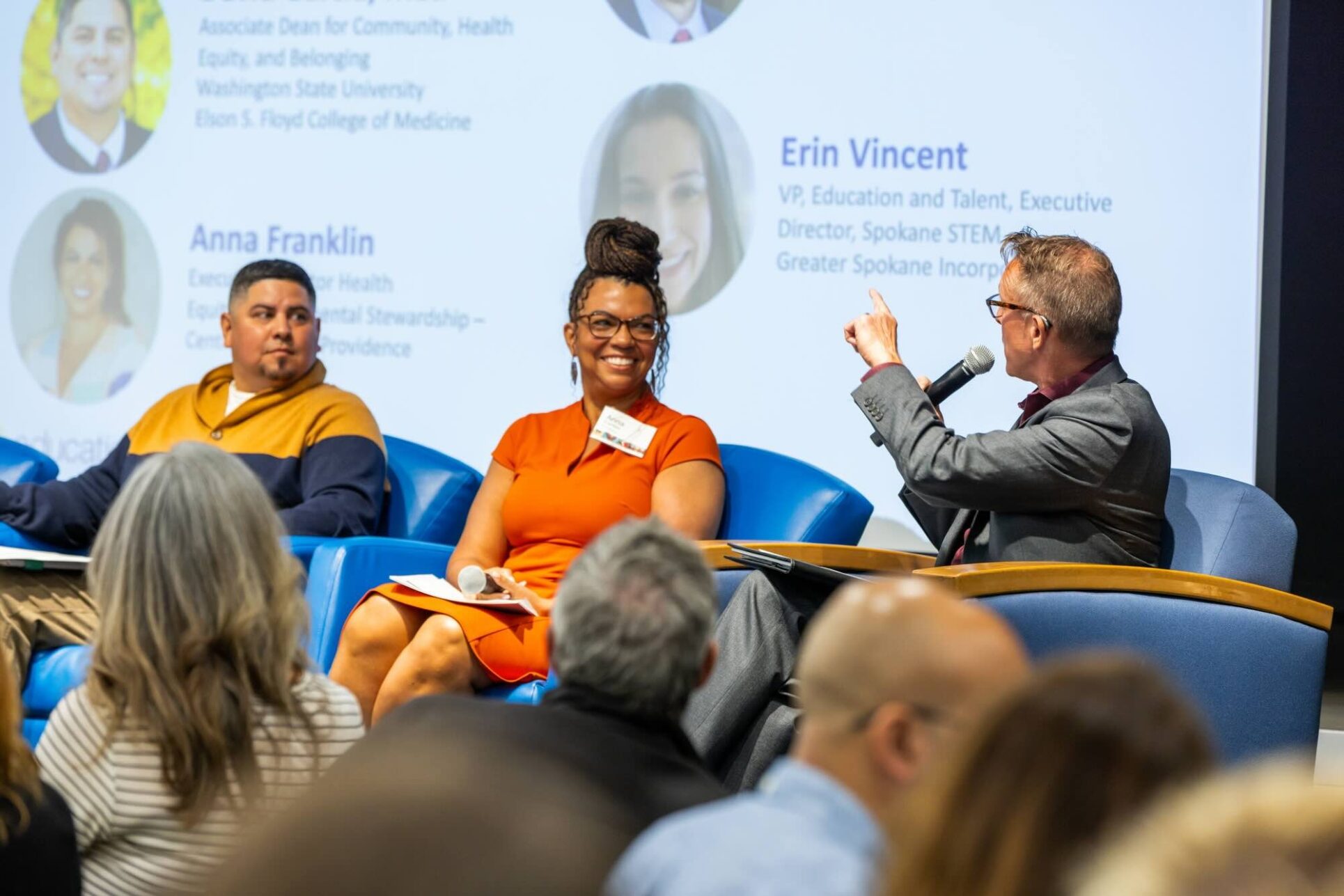
Angela Jones, Washington State Director at the Gates Foundation engages in discussion with the participants of a Limitless Learning Network Convening in Spokane, Washington. Photo by: ©Bill & Melinda Gates Foundation/Martina Machackova
Partners across Washington state believe that young people have limitless potential, and it’s up to all of us to help them fuel that potential and design the future they want. As part of the Gates Foundation’s vision to support locally led solutions that help students take a successful next step after high school, we set out to launch a learning community that would spark collaboration and new ideas in Washington state.
In 2023, due to their deep work in education, local knowledge of Washington state and postsecondary access, and experience launching similar communities, we asked Education First to help incubate this learning network. Over the past year, Education First has successfully done just that—launching the Limitless Learning Network, which is bringing a wide range of K-12 and higher education partners together to share best practices and explore solutions.
Kelly Kovacic Duran, who leads the Education First team that currently manages Limitless, sat down with the Gates Foundation to share insights into how Limitless was formed and its first-year achievements, including the powerful collaborations that have already emerged.
Cultivating a diverse learning network
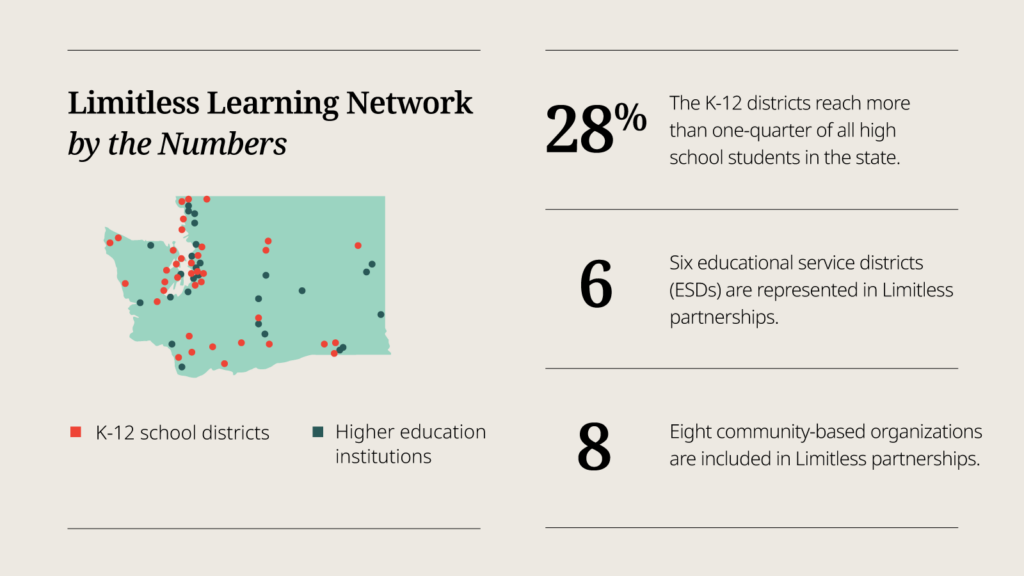
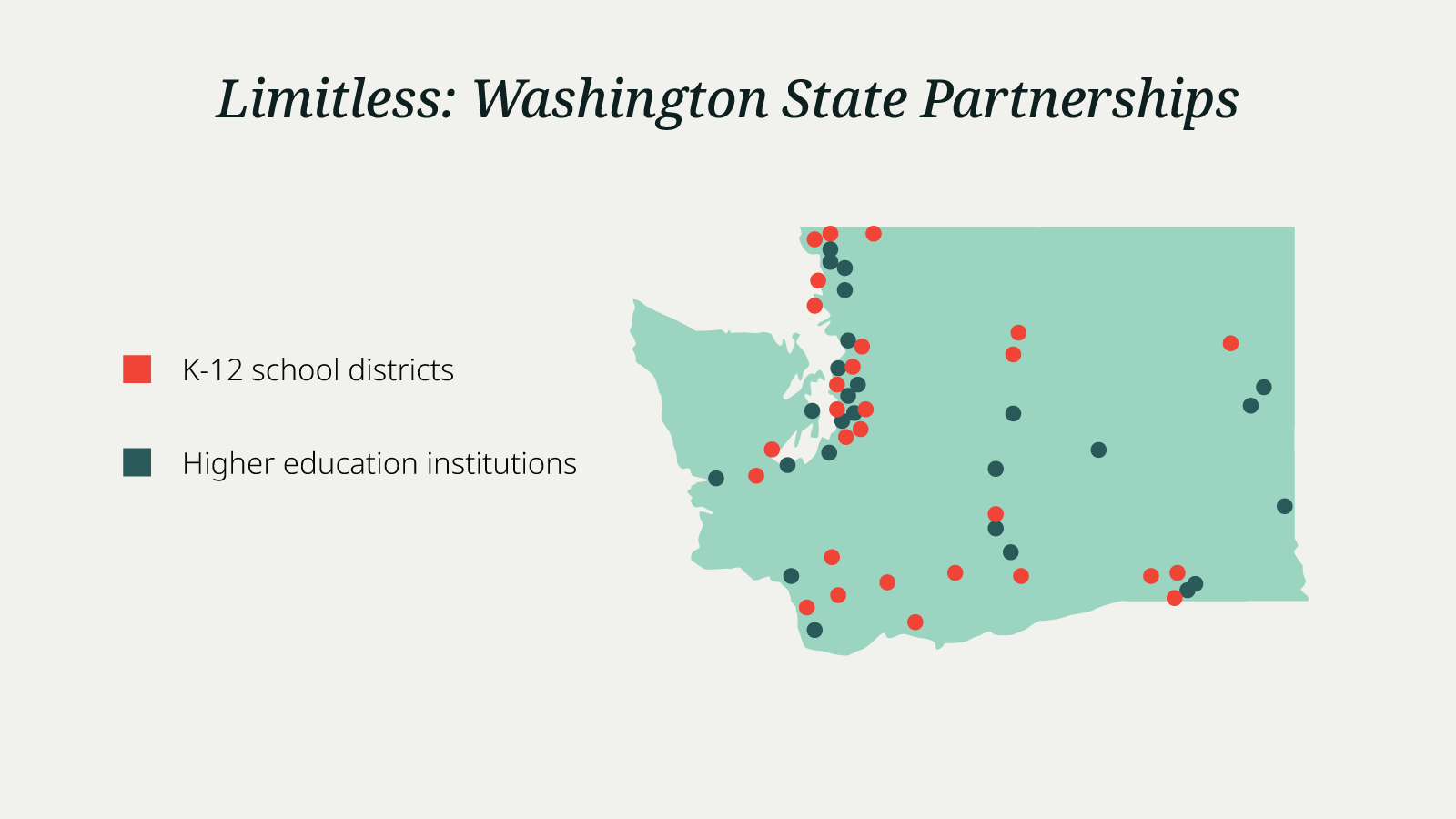
The Limitless Learning Network features 26 geographically and demographically diverse partnerships across Washington state. Twenty-one counties are represented by Limitless partners, and participating school districts reach nearly 30% of all high school students in the state. More than one-quarter represent rural communities.
As Kovacic Duran explains, “When designing the Limitless Learning Network, we brought a lot of intentionality to the diversity of the Network and made a few very strategic decisions to ensure the diversity we envisioned.”
The process began with an equitable Request for Proposal (RFP) process, which included gathering feedback from community leaders and educators early on. This feedback helped inform the development of the RFP, which also contained clear and transparent messaging about who would most benefit from applying—allowing potential partners to make informed decisions about their participation and the use of their time and resources. Education First also explored outreach strategies to reach beyond the usual suspects.
“We tried to make the application as streamlined as possible and were explicit in messaging that this was for organizations and partnerships beyond the typical places and spaces that the Gates Foundation had supported in the past. This approach was directly informed by feedback we heard when doing outreach across the state,” says Kovacic Duran.
Education First also curated a selection committee that featured individuals from different backgrounds and regions within the state. This diversity of perspectives helped ensure they considered a wide range of aspects when evaluating applicants—and ultimately resulted in a Learning Network composition that is as varied as it is vibrant.
Building an infrastructure for collaboration
The ultimate goal of the Limitless Learning Network is to have partnerships actively engaged in collaboration and adopting new practices that positively impact students. To get there, Education First knew they had to start with strategies that helped partners foster connection.
“What we’ve found is so important with communities of practice and networks in particular is that members feel a deep sense of connection to one another and that they deeply understand and feel energy around the North Star and goal of the network,” Kovacic Duran notes.
“Education is a deeply relational experience. When we think about experiences students have, so much of that is deeply impacted by the relationships they have with their teachers and adults. This is equally true of leaders in the system as well. Developing and nurturing trusting relationships is critical for the collaboration required to transform systems and dismantle inequities.”
Each partnership was greeted with a welcome packet and one-on-one calls with Education First, where they had the chance to share their aspirations and get clarity on roles and responsibilities. Education First also spent significant time developing the infrastructure to support Limitless, including clear roles for technical assistance providers and streamlined communication channels. This step is not always talked about, but Kovacic Duran knows just how critical it is.
“I think it’s helped members engage and understand the vision for the Network, tap into the knowledge and diverse experiences found across teams, and access resources and support. They know how they can tap leverage the network.”
Early collaboration and impact
As they got to know Limitless members, Education First found ways to ensure that partnerships were involved in co-designing sessions and Network events. This approach has already shown promise, with regions actively sharing successful strategies and solutions with one another.
Here are just a few examples that have emerged in the first year:
- Data Sharing: Several regions turned to their partners in Spokane to understand how they established robust data-sharing agreements across institutions. Spokane leaders shared their models and helped regions develop and refine their own agreements.
- Family Workshops: Limitless members were inspired by a successful college-going family workshop at Walla Walla Community College and are now working to create a Washington state curriculum that could be used in different regions across the state.
- FAFSA Strategies: With a difficult FAFSA rollout this year, network members came together to discuss and share strategies that have helped students and families navigate the challenges with the financial aid form.
- Regional Connections: In Whatcom and Skagit counties, three different partnerships are creating a working group focused on better connecting and streamlining their efforts across the region.
As Kovacic Duran reflects, these collaborations not only demonstrate the power of the network but also validate the need for it. “It’s been both validating and to a certain extent surprising to see how much excitement and interest there is around Limitless. The ways in which partnership teams are using their experience and engagement in Limitless to help solve challenges and adopt new solutions and approaches that ensure more students across our state transition successfully into post-secondary opportunities.”
Lessons learned and looking ahead
Education First’s work to launch Limitless will wind down at the end of the year, as the Gates Foundation had always intended to identify a permanent Learning Network manager. Education Northwest will step into this role in December 2024.
Thanks to Education First’s leadership, the first year of Limitless has provided valuable insights and set the Learning Network up for long-term collaboration. The work has also highlighted the ongoing need to name and understand the trauma that so many communities and students of color have experienced.
“We’ve centered our approach on deeply understanding the experiences of the regions, Network members, and their students—including the ways in which systems have created harm for many of these students and communities. We’ve tried to make sure that as a Network we are focusing on both upstream and downstream factors as part of the discussion around research-backed strategies and supports for increasing postsecondary access.”
Looking forward, as both a parent whose children attend schools in Washington state and an education leader that helped launch this unique collaboration, Kovacic Duran has high hopes for the Limitless Learning Network’s future—including that it will continue to be rooted in relationships and trust.
“My greatest hope is that there is continuity, that partnerships are able to really tap into Limitless to deepen and expand the work they’re doing, and that the Network is a jumping off point for a broader movement both within regions and across the state.”
Read next
Meet Education Northwest, the new Limitless Learning Network manager
The nonprofit will continue to drive collaboration between school districts, colleges, and other partners in Washington state to help young people design the future they want.
Announcing the 25 partnerships in the Limitless Learning Network
Through Limitless, local partnerships will have an opportunity to connect with other teams of local K-12 and higher education partners across Washington state, creating space to share information, explore new ideas, and develop best practices together.
Meet the four regional partnerships helping students explore postsecondary pathways in Washington state
The Gates Foundation’s Horizons program is supporting four partnerships that are ready to expand programs to help more students design the future they want.